
Last updated November 4, 2026
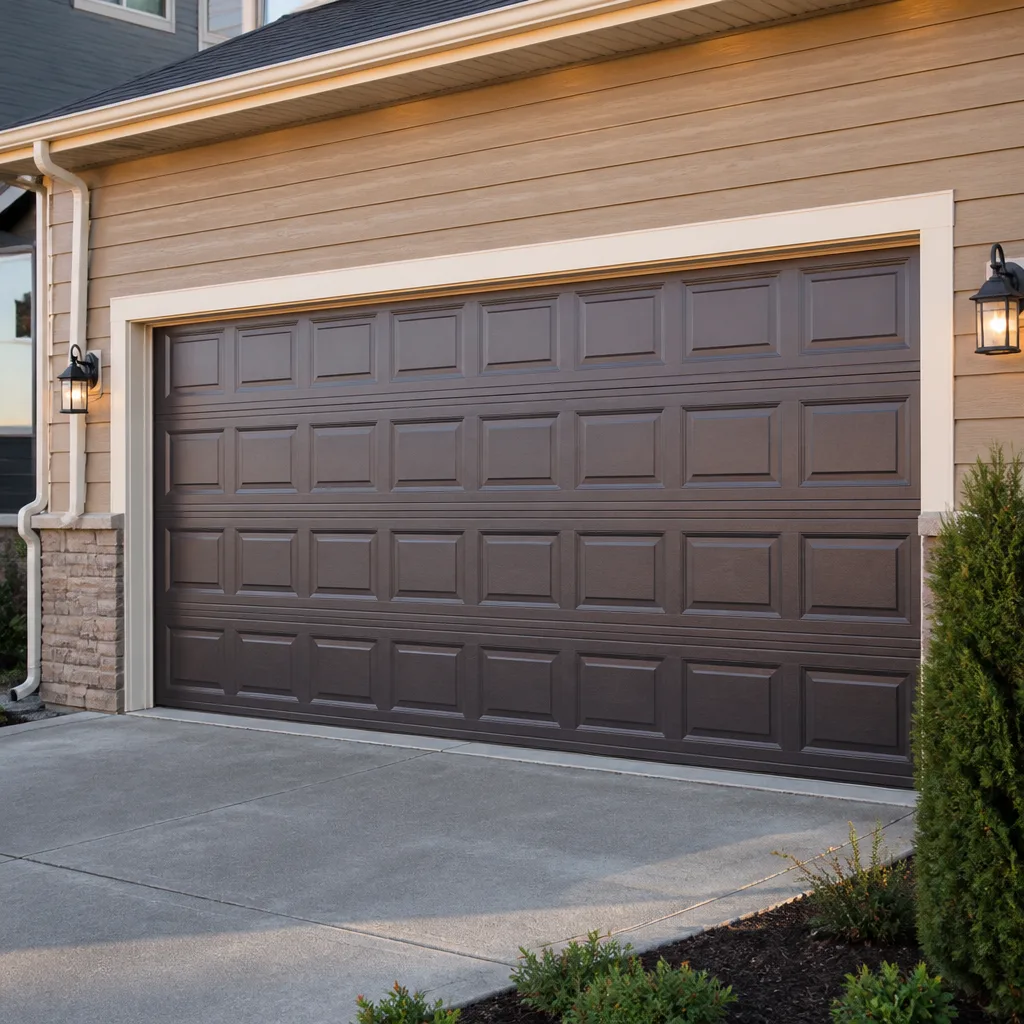 Raised-panel steel
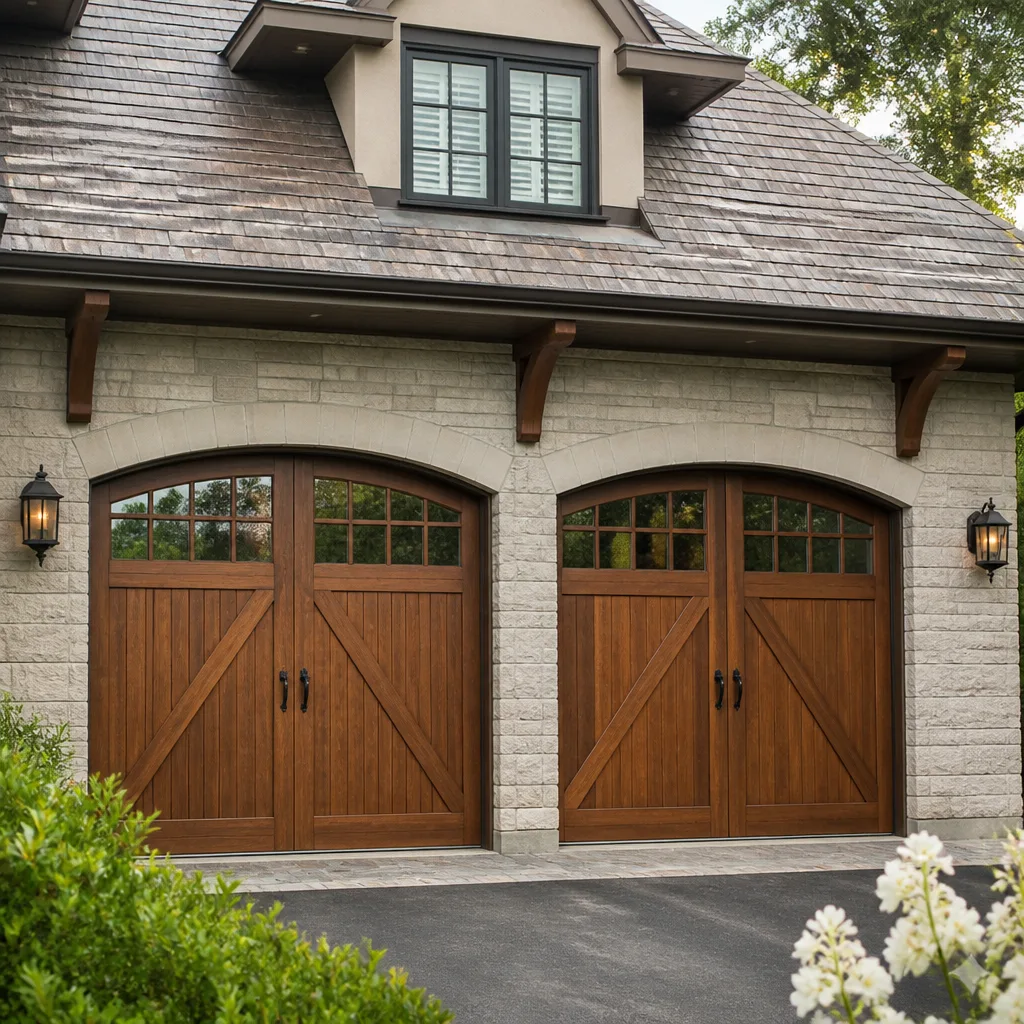 Carriage house
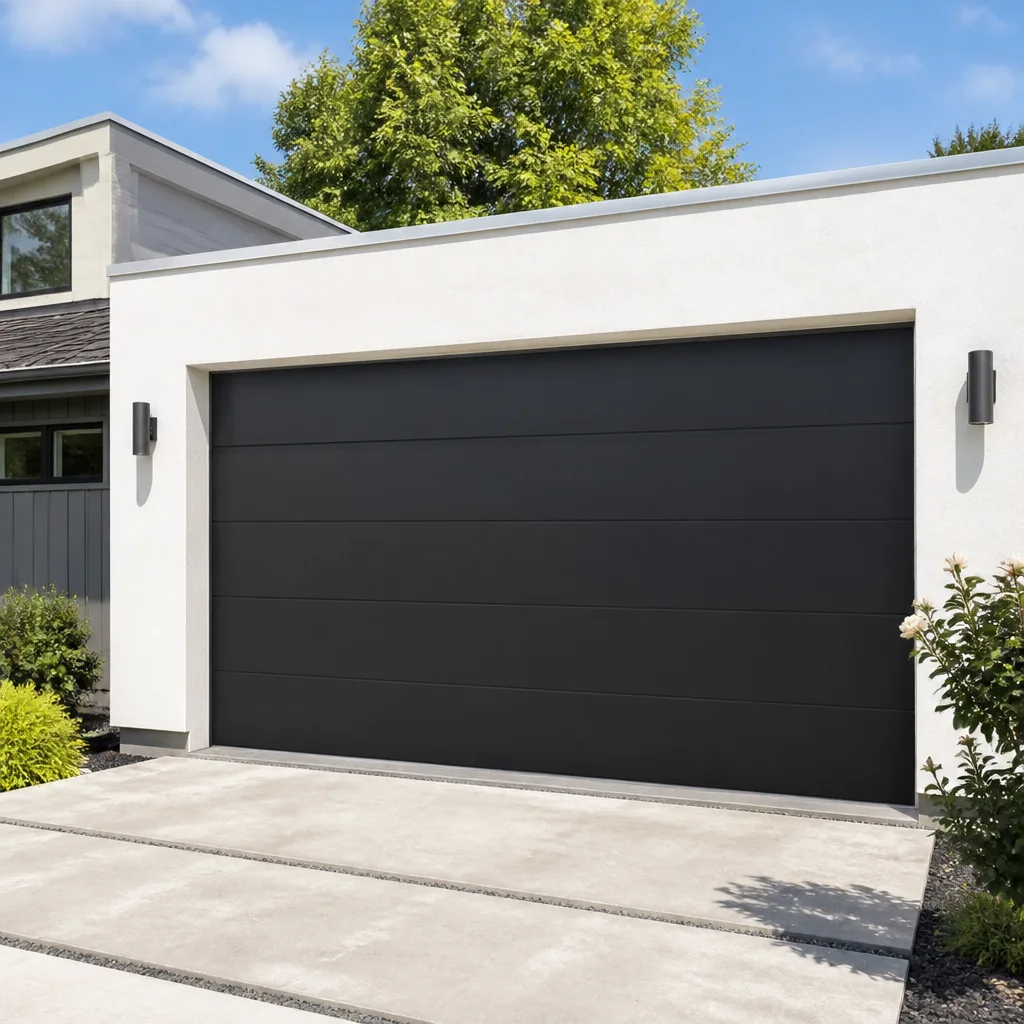 Modern flush
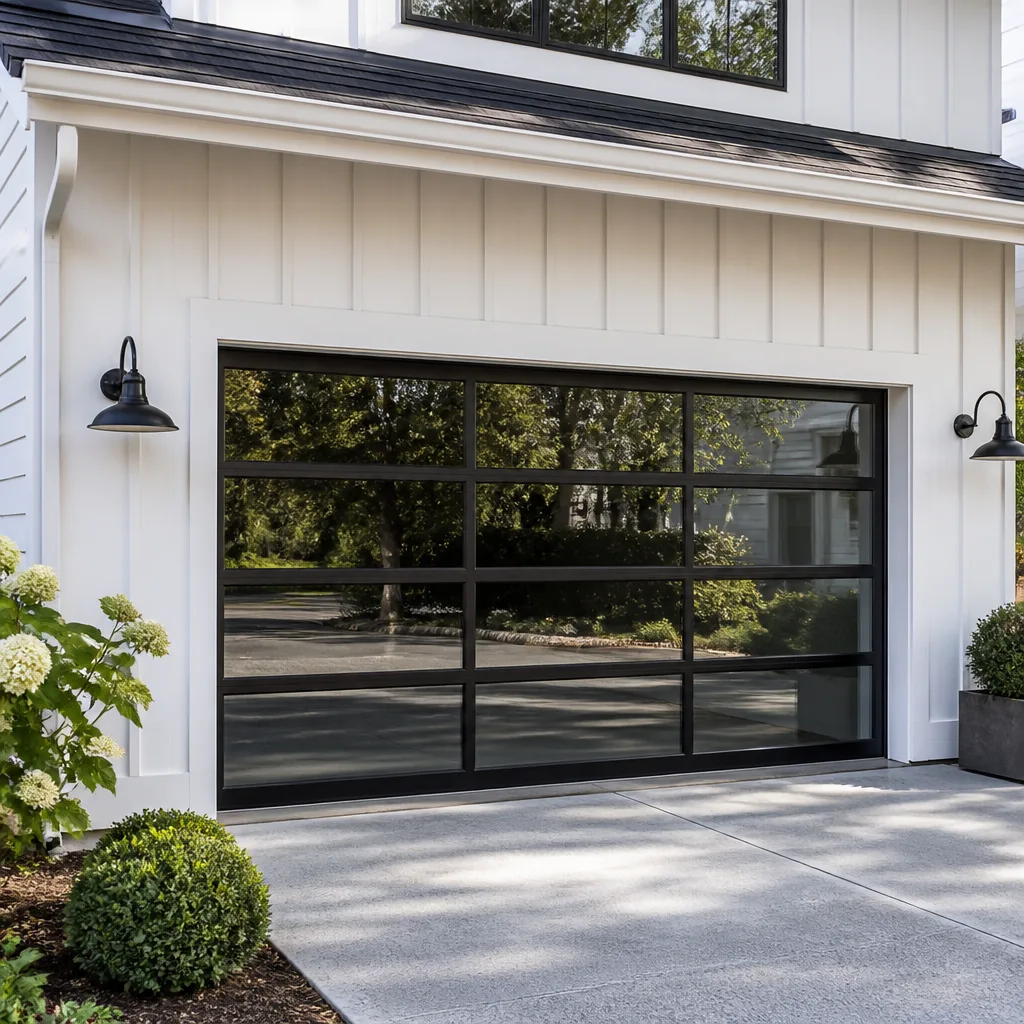 Full-view glass
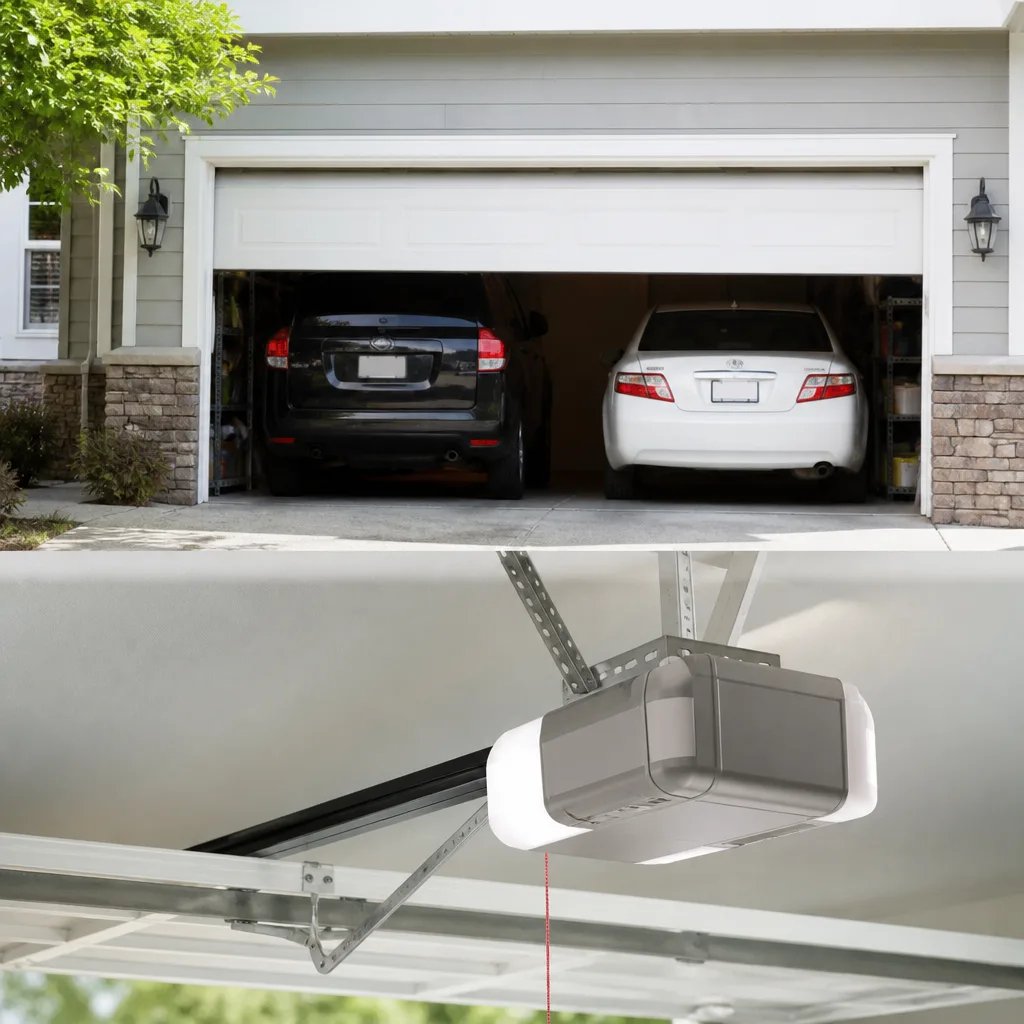 LiftMaster openers
 Chamberlain openers
Full 25-point door and opener safety check with every visit - springs, cables, rollers, tracks, and your LiftMaster or Chamberlain opener included
You get a price before we start. It does not change when the truck arrives.
Get your free estimateGarage Door Repair Troubleshooting in Chino Hills: Common Problems and How to Fix Them
Most garage door problems in Chino Hills trace back to one of four root causes: spring wear, electrical faults, sensor misalignment, or mechanical friction. Knowing which one you’re actually dealing with saves you from fixing the wrong thing twice. The number one reason a “fixed” garage door breaks again within 60 days is that the symptom was treated, not the cause. A door that reverses mid-close and a door that reverses at the floor look identical but need completely different fixes. This guide walks you through how to tell them apart, what’s safe to handle yourself, and when to bring in a specialist who works on every major brand.
Quick Answer
Garage door troubleshooting in Chino Hills starts with identifying whether the failure is electrical, mechanical, sensor-related, or spring-related before touching anything. Most homeowners can safely address sensor alignment, remote batteries, and track obstruction; springs, cables, and opener motor faults need professional attention. We’ll show you how to map the symptom to the cause, what the sounds mean, and what to photograph before you call.
Styles & brands we work with
- Raised-panel steel
- Carriage house
- Modern flush
- Full-view glass
- LiftMaster openers
- Chamberlain openers
Table of Contents
- Symptom-to-Cause Mapping: A Decision Tree for Chino Hills Homes
- How Chino Hills Temperature Swings Create False Alarms
- What Garage Door Sounds Actually Mean: Grinding, Popping, Squealing
- Safe DIY Troubleshooting Steps You Can Do Today
- Why Springs and Cables Are Not DIY Repairs
- How to Document the Problem Before Calling a Technician
- Brand-Specific Notes: Genie, Clopay, Amarr, Wayne Dalton
- Opener Problems vs. Door Problems: Telling Them Apart
Symptom-to-Cause Mapping: A Decision Tree for Chino Hills Homes
Before you reach for a tool, take thirty seconds to map what’s happening. Most repair calls we handle in Chino Hills fall into one of four categories. The distinction matters because the fix for each is completely different, and doing the wrong fix often makes the problem worse.
Start here: What exactly is the door doing?
- The door does not move at all when you press the button. Cause is usually electrical: dead remote battery, tripped GFCI outlet, disconnected power cord, locked opener, or failed logic board. Check the wall button. If the wall button works but the remote doesn’t, it’s a remote issue. If neither works, check the outlet and breaker.
- The door moves a few inches, then stops or reverses. This usually points to safety sensor misalignment, a blocked sensor lens, or an obstruction. But it can also be a broken spring that the opener is now fighting against. If the door is heavy and hard to lift manually, stop and call a pro.
- The door opens, but struggles, jerks, or runs unevenly. This is mechanical: worn rollers, bent tracks, failing hinges, or a spring losing tension. The door may bind partway up and then continue.
- The door works, but makes a loud noise while moving. Sound is diagnostic. Grinding, popping, and squealing each indicate a different issue. We cover this in the sounds section below.
Once you’ve classified the symptom, you know which path to take. Electrical issues are often safe to troubleshoot yourself. Mechanical issues can sometimes be addressed with lubrication and tightening, but many require parts replacement. Spring and cable issues are always professional territory. Here’s the part most guides skip: Chino Hills’ specific climate means some of these symptoms appear seasonally without any actual component failure. More on that next.
How Chino Hills Temperature Swings Create False Alarms
Chino Hills sits inland enough that summer afternoons push well into the 90s, while desert-cooled nights can drop twenty degrees or more. That daily thermal cycle causes metal to expand and contract. For a garage door system built on metal tracks, metal rollers, and a metal torsion tube, this expansion means the door’s hardware shifts slightly throughout the year. A door that tracks perfectly in March can bind in August, not because anything broke, but because the metal has expanded and the clearances have tightened.
We’ve seen homeowners in neighborhoods like Butterfield Ranch and Gordon Ranch convinced their door needed new rollers, when the actual issue was seasonal track shift. The track bolts had been torqued in cooler weather, and the summer heat had changed the geometry enough to cause a slight bind. The fix was a five-minute track adjustment, not a roller replacement. Before you replace parts, consider whether the symptom appeared suddenly alongside a temperature spike.
What does this mean for troubleshooting? If your door is suddenly sticking or reversing on a hot afternoon but works fine in the morning, check whether the tracks feel hot to the touch and whether the gap between the track and the door edge looks narrower on one side. A small adjustment is a very different job from a roller replacement, and knowing the difference saves real money. This is also why we recommend having your door’s track alignment checked before the hottest months if the door has not been serviced in several years. The same seasonal shift affects door panels as well, especially wood composite doors from garage door repair materials that absorb heat differently than steel.
What Garage Door Sounds Actually Mean: Grinding, Popping, Squealing
Sound is the richest diagnostic tool a garage door gives you, and most people ignore it. Each sound corresponds to a specific set of likely causes. Here’s what we listen for when a customer describes a noise over the phone.
Grinding
A grinding sound is metal dragging across metal without proper lubrication, or a bearing that has worn out. The most common source is the opener’s internal gears, particularly on older Chamberlain and LiftMaster models with plastic drive gears. Over time the gear teeth wear smooth and the motor grinds against the remains. A related but different grind comes from the door’s hinges and roller stems, which need lubrication periodically to avoid metal-on-metal wear. Judge the location: if the grinding comes from the motor housing, it’s opener gears. If it comes from the door panels themselves, it’s hinges or rollers. See our garage door opener repair guide for more on motor-side failures.
Popping
Popping typically comes from torsion springs as they bind and release during operation. A spring that pops suggests it’s either incorrectly greased, rusting at the coils, or nearing the end of its service life. It can also be the sound of the torsion spring settling on the shaft, especially after a recent spring replacement. In Chino Hills’ dry air, rust is slower to form than it would be in humid climates, but it still happens eventually on ungreased springs. A single pop is not an emergency. Repeated popping with every cycle is worth a professional look, because a spring that shifts under load can start wearing unevenly.
Squealing
Squealing is friction. Rollers with dry bearings, a belt or chain that’s too tight, or a panel edge rubbing the track. The most common fix is lubrication, but note which roller type you have: nylon rollers have sealed bearings that sometimes fail and need replacement rather than oil. Steel rollers on steel tracks tend to squeal when they’re dry. A silicone-based garage door lubricant applied to the roller bearings, hinge pins, and spring coils often eliminates the squeal in minutes. Never use WD-40 or grease; they attract dust and create a grinding paste over time.
Safe DIY Troubleshooting Steps You Can Do Today
Several checks are genuinely safe and often resolve the issue without a service call. Work through these in order, and stop as soon as you identify the problem.
- Check the power source. Confirm the opener is plugged in firmly, the outlet’s GFCI has not tripped, and the circuit breaker is on. Plug a lamp into the same outlet to confirm power. If the outlet is dead, press the GFCI reset button on that outlet.
- Test the wall button and remote separately. If the wall button opens the door but the remote does not, replace the remote battery first. If the wall button also fails, unplug the opener for 30 seconds and plug it back in to reset the logic board.
- Inspect the safety sensors. The two photo-eye sensors near the bottom of the door tracks must point directly at each other. If a broom, leaf, or spider web blocks the beam, the door will not close. Clean the lenses with a dry cloth and verify the small LED lights on both sensors are solid. A flickering or off LED means alignment or wiring issue.
- Lubricate the moving parts. Apply a silicone-based lubricant to the roller bearings, hinge pins, and the torsion spring. Avoid the track itself; the door should ride on the rollers, not slide along the track. This single step resolves more noise complaints in Chino Hills than any other fix.
- Check the manual release handle. If someone pulled the red emergency release cord recently, the door may be disengaged from the opener carriage. Re-engage it by pressing the wall button until the carriage reconnects, or pull the cord back toward the door to lock it in.
- Test the balance manually. With the door closed, pull the release cord and try to lift the door by hand. A properly balanced door should lift smoothly with moderate effort and stay open around waist height. If it’s heavy, slams shut, or drifts, the springs are losing tension. Stop here and call a professional.
If you make it through these steps and the door still misbehaves, the problem is likely in the spring system, cables, or opener internals. Those are not DIY territory.
Why Springs and Cables Are Not DIY Repairs
A torsion spring carries the entire weight of your garage door, wound tightly enough to hold several hundred pounds of tension at all times. When a spring breaks or needs adjustment, that stored energy has to be released and rewound in a specific sequence using specialized winding bars. If the bar slips, if your hands are not clear, or if the spring binds unexpectedly, the release can cause serious injury to hands, arms, face, or eyes. This is not a warning about being careful with a hammer. Torsion springs can move with enough force to break bone.
Extension springs, which run alongside the horizontal tracks on older doors, have their own risk: when they break, they launch the broken ends through the garage. Safety cables are supposed to prevent this, but older doors in Chino Hills frequently lack them. If you own a home with extension springs and no safety cables running through them, have that addressed before the spring fails.
Cables are equally unforgiving. Each cable is under tension whenever the door moves, routing through drums that keep it spooled evenly. A frayed cable that snaps mid-operation can whip through the air. Cable work requires releasing spring tension, replacing the cable, and rewinding the springs, a sequence best handled by someone who does this daily. If you see frayed strands, a loose cable, or hear a loud snap followed by the door hanging crooked, do not try to fix it. Call a specialist. We work with every major brand from Pinecrest Garage Door, including Genie openers and Clopay, Amarr, and Wayne Dalton doors, so we diagnose what you have, not what’s easiest for us.
How to Document the Problem Before Calling a Technician
The more information you gather before calling, the faster the diagnosis and the less time a technician needs on site. This is especially true when you’re calling from areas like Los Serranos or Payne Ranch, where commute time affects scheduling. Here’s what speeds up the process meaningfully.
- Record the sound. A 10-second video with audio captures the noise better than any description. Record the door opening and closing from inside the garage, near the motor, and from outside near the springs.
- Photograph the springs. Take clear photos of the torsion spring above the door, including both ends where the winding cones sit. Also photograph the cables and drums at the top corners. A technician can often identify wear or misalignment from photos before arriving.
- Note the brand and model. The opener’s brand and model are printed on the motor housing. Door brand labels are usually stapled to the inside edge of a door panel or stamped on the lock side. If you have a Genie opener with a Clopay door, for example, say so. It matters for parts planning.
- Log the symptoms precisely. Not just “it won’t close.” Write down: does it work with the wall button but not the remote? Does it reverse immediately or halfway down? Does it open but not close? Does it make noise only in one direction? The pattern is the diagnosis.
- Check the sensor lights. Note the color and behavior of the small LEDs on both photo-eye sensors. Solid green and solid red is typical on many models. Blinking or off lights are a symptom. This single observation narrows the possibilities immediately.
With this information, the phone diagnostic often takes five minutes instead of twenty, and the technician arrives with the right parts already on the truck. That’s the difference between one visit and two.
Brand-Specific Notes: Genie, Clopay, Amarr, Wayne Dalton
Every major brand has its own common failure points. If you know what you own, you can troubleshoot more precisely.
- Genie openers have a reputation for reliable motors, with the weak points usually being the wall-mounted control wiring and the safety sensor connections. The Genie Intellicode system occasionally loses sync with the remote and needs reprogramming, which is a five-minute process in the manual. Before replacing a Genie opener, check whether the issue is simply pairing.
- Clopay doors are extremely common in Chino Hills, especially steel construction with polyurethane insulation. The most frequent call we handle is a broken bottom seal or rust starting at the bottom panel corners where sprinkler water accumulates. Panel replacement on Clopay doors is straightforward because of their modular design.
- Amarr doors use a similar steel construction but their hardware, particularly hinges and roller carriers, is sturdier. The tradeoff is that replacement hardware for Amarr is often proprietary, which means using generic parts can cause alignment problems. When an Amarr door needs parts, it matters that the technician stocks or sources Amarr-compatible hardware.
- Wayne Dalton doors present a specific challenge: their TorqueMaster spring system is housed inside a tube rather than exposed on the shaft above the door. Homeowners often cannot see the spring at all, which makes visual inspection impossible. Wayne Dalton doors also use a proprietary bottom bracket design. If you have a Wayne Dalton door, spring diagnosis almost always requires special tools and brand knowledge. Do not assume a standard torsion spring video applies to your door.
We service all of these brands, and our recommendation process is brand-neutral. The right fix depends on what’s installed, not on what we stock most easily.
Opener Problems vs. Door Problems: Telling Them Apart
About half the repair calls we receive start with the customer describing an opener problem when the door itself is actually the failure. Or the reverse: the opener is making noise and the door is fine. Here’s how to separate them quickly.
- Pull the emergency release cord and lift the door by hand. If the door feels heavy, unbalanced, or binds in the tracks, you have a door problem. The opener may actually be fine, it’s just working against a door it can’t pull.
- If the door opens smoothly by hand but the opener struggles or strains, the opener is at fault. Common opener culprits: worn drive gears (grinding from the motor), a failing capacitor (door won’t start but hums), a stripped gear on the carriage, or a broken belt. These are repairable without replacing the entire opener in many cases.
- If the door works manually but reverses when operated by the opener, suspect sensor alignment or a logic board issue. The opener closes until it receives a false obstruction signal. This is an opener-side repair.
- If the door jerks when moving manually, suspect the door’s hardware, not the opener. Bent tracks, worn rollers, and failing hinges cause jerky motion that the opener only amplifies.
The takeaway: test the door manually first. If manual operation reveals the fault, you know where the work belongs. This one step prevents replacing an opener that’s perfectly fine because the springs were shot, or replacing springs when the real issue was a $40 gear kit in the opener.
Common Mistakes to Avoid
- Replacing the remote battery before checking the wall button. If the wall button works, the problem is the remote. If neither works, the problem is power or the opener itself. Jumping to battery replacement wastes time and often misses the real fault.
- Lubricating the track itself. The track should be clean and dry. Lubricating it attracts dust, creates sludge, and makes the problem worse. Lubricate the roller bearings, hinge pins, and spring coils instead.
- Ignoring a noisy spring because it still works. The pop or squeal from the spring is an early warning. A spring that’s binding or wearing unevenly often fails during high-use periods, like Monday mornings after a weekend of cycle use. Fixing a squealing spring is easy; replacing a snapped one is not.
- Adjusting the spring tension with improvised tools. We’ve had customers call after trying to wind a spring with screwdrivers or metal rods. This is how serious hand and face injuries happen. Springs require winding bars sized exactly to the cone holes.
- Assuming the opener’s force setting needs to be cranked up. A door that reverses halfway down is usually reacting to a sensor issue or mechanical friction, not insufficient force. Raising the force setting masks the cause and turns the opener into a hazard.
- Not photographing the door label before calling. The brand, model, and size are printed on the door. A photo beats a description every time, and it prevents ordering the wrong replacement panel or hardware for homes across Chino Hills’ varied housing stock.
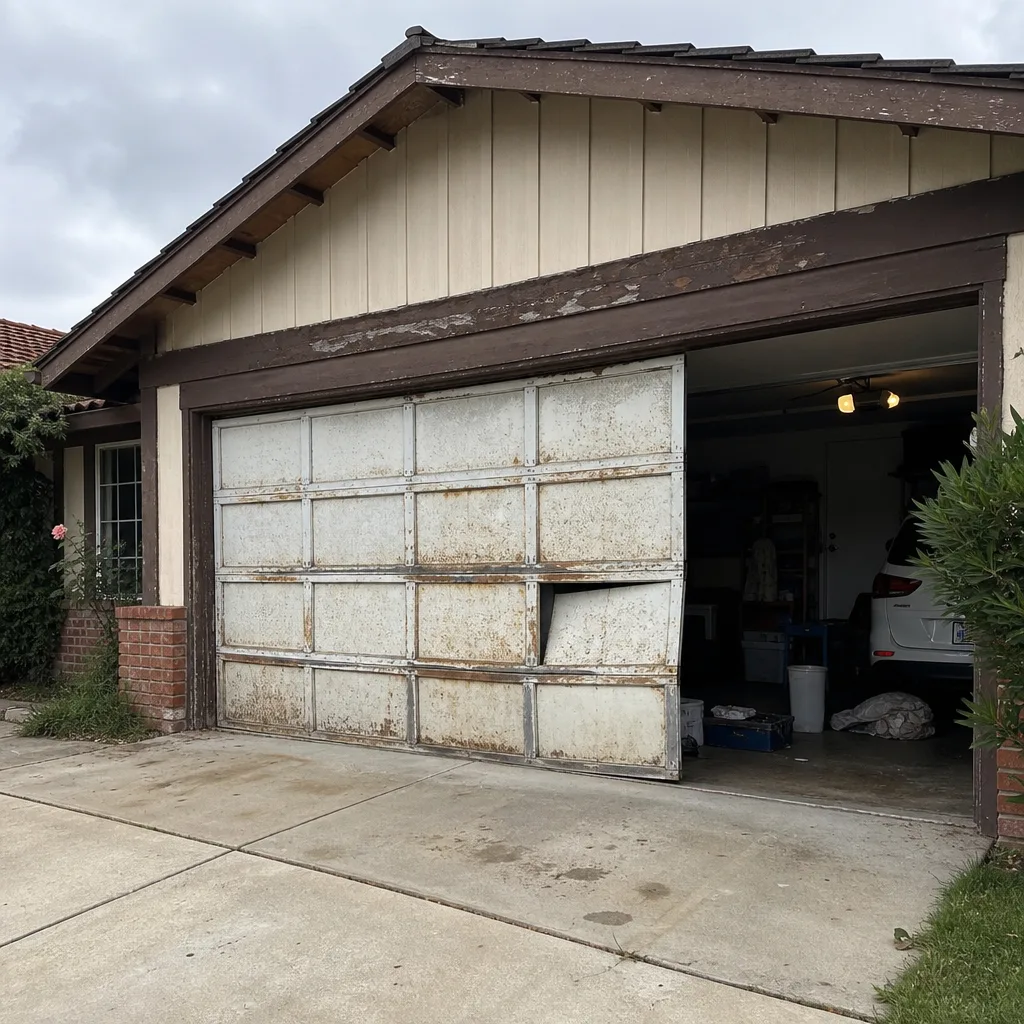
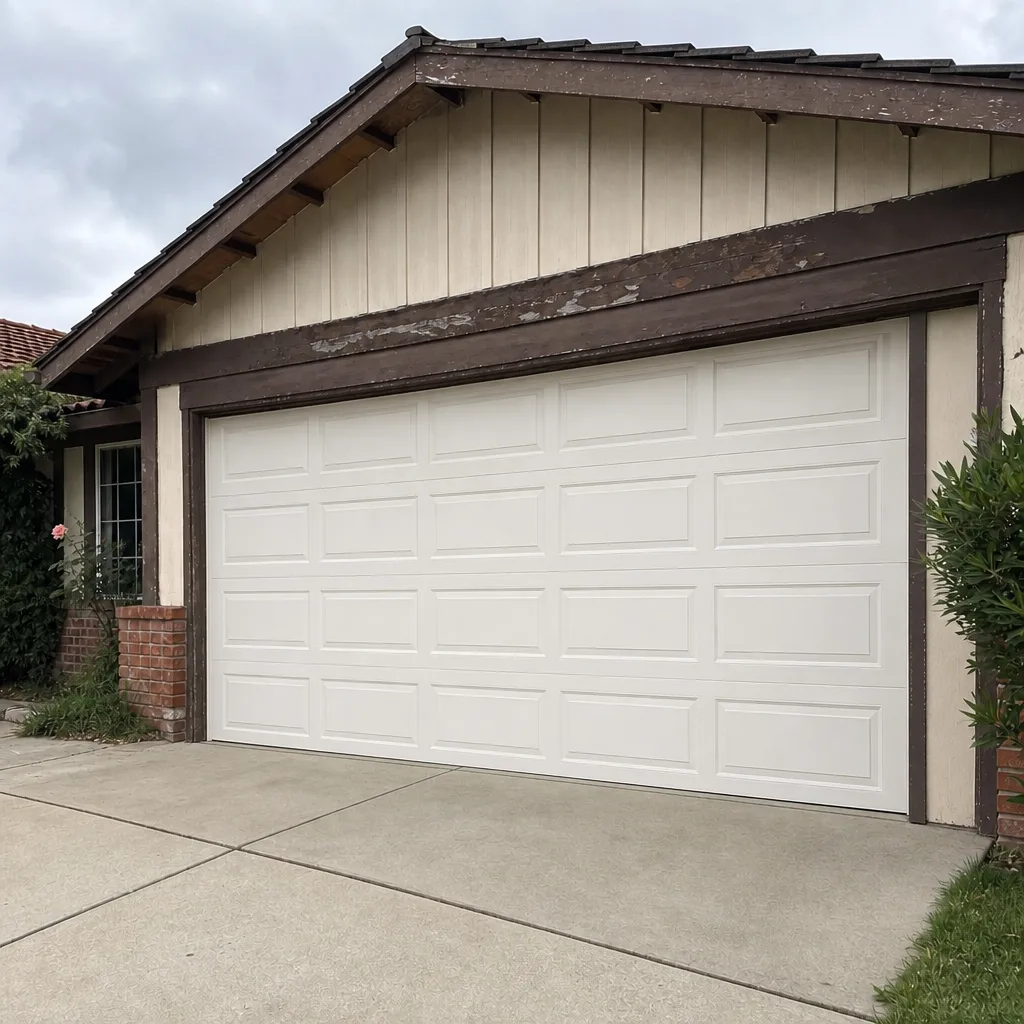
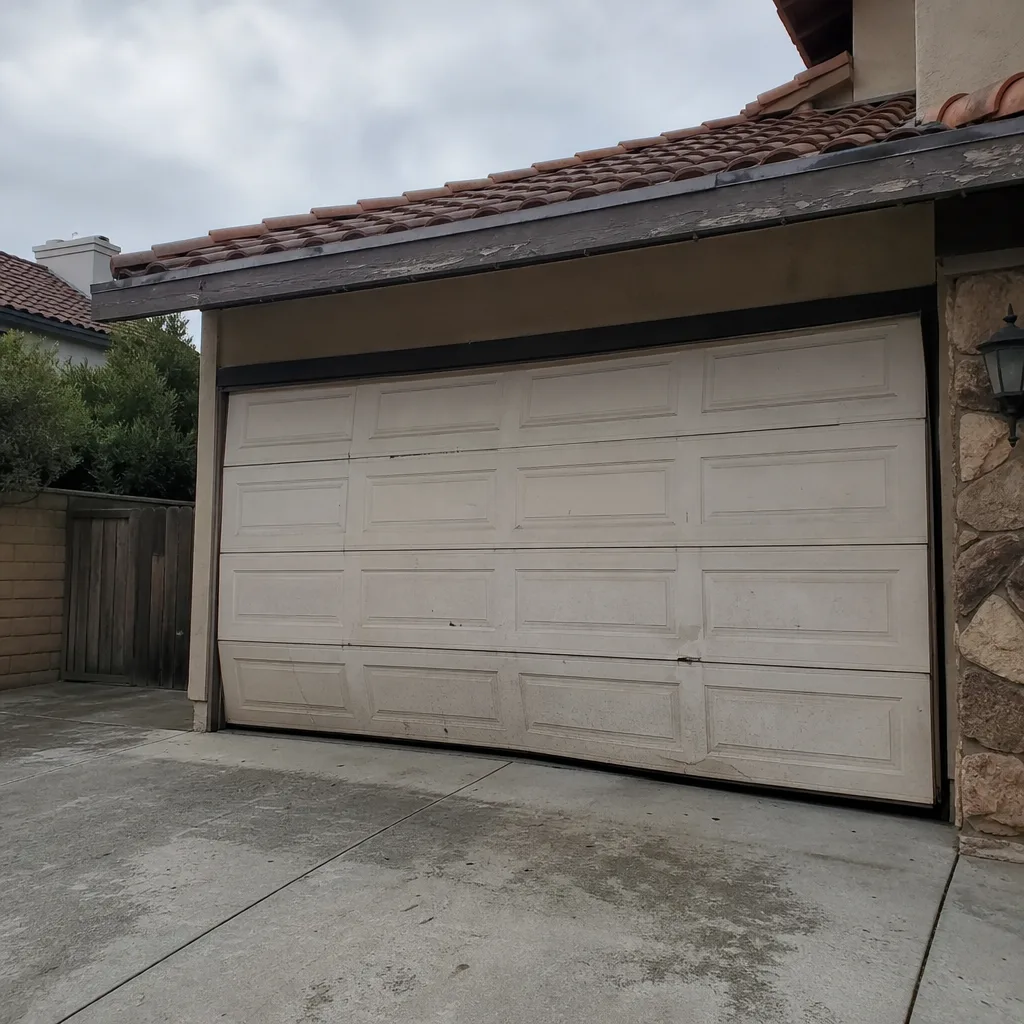
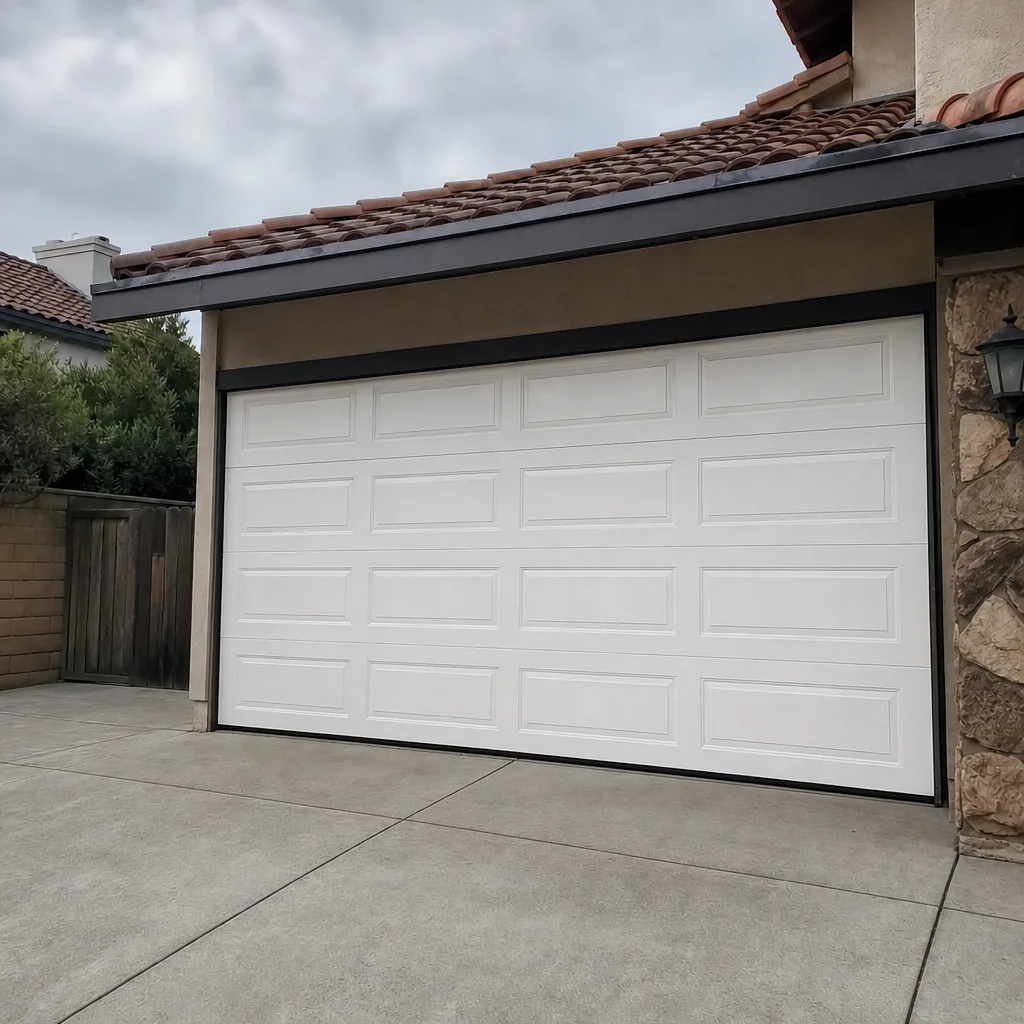
See the difference
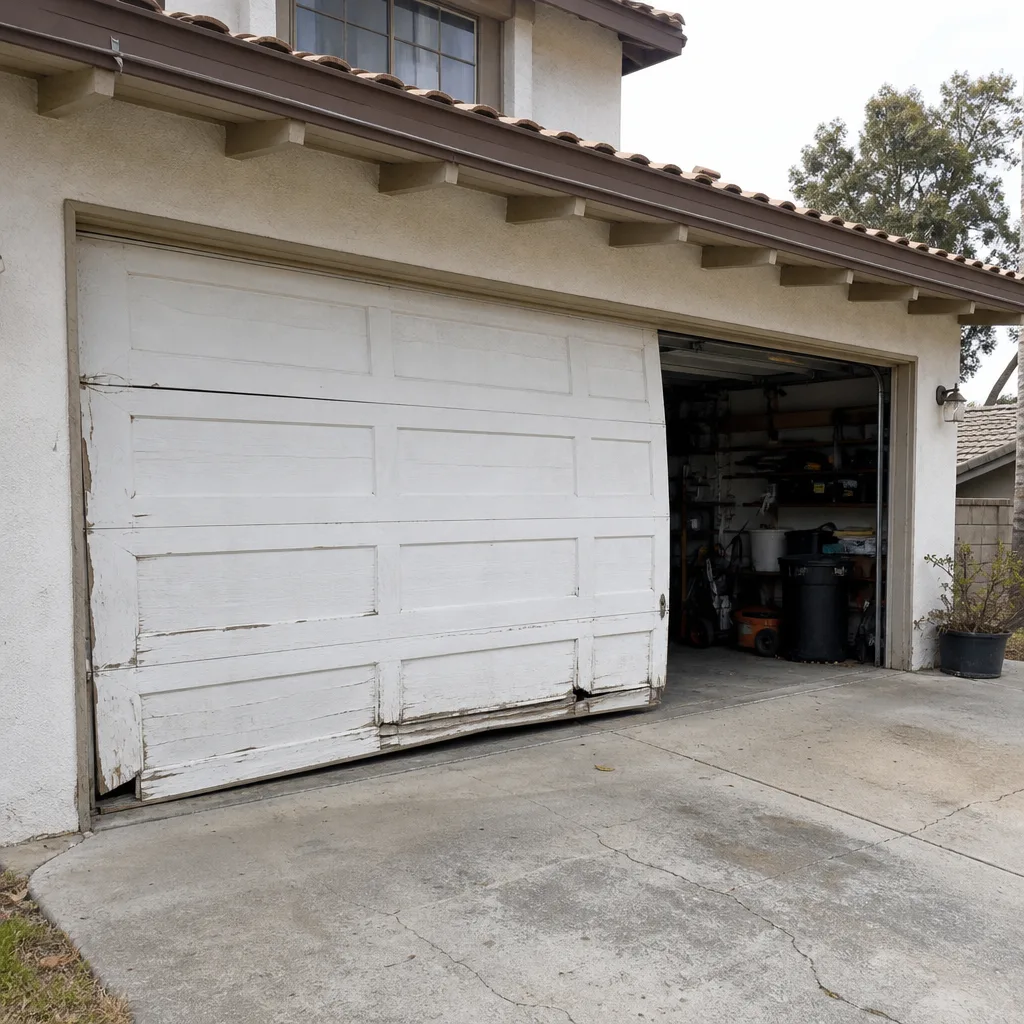 Before
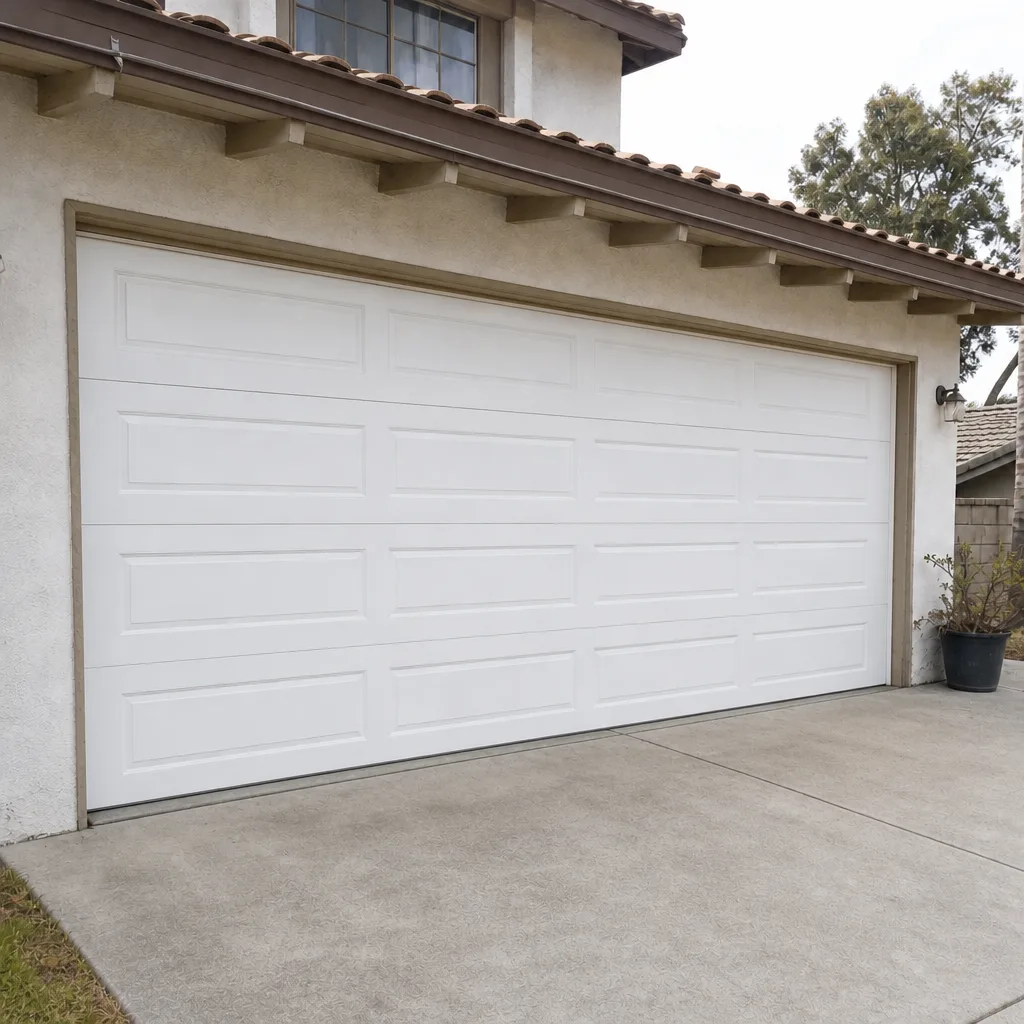 After
 Before
 After
 Before
 After
When to Call a Professional
Call a professional if the door is heavy or unbalanced when lifted manually, if you see a visible gap in the torsion spring or frayed cable strands, if the door hangs crooked, or if the opener is making a grinding sound from the motor housing. These conditions mean stored tension is compromised or internal motor parts are failing, and continued operation can cause more damage. If the door slams shut on its own when released, treat it as an emergency: a door that falls is a safety hazard to anyone underneath it. Pinecrest Garage Door offers free estimates in Chino Hills. Call (877) 376-0803 and describe the symptoms. We answer 24/7. Fast dispatch from 7am to 7pm, Sunday through Friday.
Frequently Asked Questions
A door that reverses near the floor is usually reacting to the opener’s downward force limit being set too high, or an obstruction on the floor such as a rock, leaf, or built-up edge. Adjust the force setting lower and clear the floor area. If the problem persists, the sensors may be angled slightly outward at the bottom, triggering a false obstruction signal as the door approaches them.
Phantom openings are typically caused by a stuck wall button, a remote with a defective button, signal interference from a neighbor’s opener on the same frequency, or a logic board fault. The easiest test is to remove the remote batteries and see if the behavior stops. If it does, the remote is the culprit. If it continues, the wall button wiring or the opener’s receiver board is likely at fault.
Torsion spring replacement in Chino Hills typically runs $180 to $340 for a single spring, and most doors have two that should be replaced together since they wear out at the same rate. Double-spring systems generally fall in the $300 to $680 range installed. The exact price depends on the door’s weight, the spring’s wire size and cycle rating, and whether the spring is standard or a specialty model. A written estimate before any work starts is standard practice.
Technically yes, but it’s rarely a good idea. When springs are installed in pairs, both have the same cycle count and the unbroken one is equally worn. Replacing only the broken spring means an unbalanced door and a second service call within months. The cost of doing both at once is nearly always less than two separate visits.
The most common cause is the door warming up after a cool Chino Hills night. Metal components contract in the cool air and expand when the sun hits the door, sometimes causing a single pop as the panel seams release. If the bang is frequent, it can also indicate a roller leaving the track briefly or a spring shifting on the shaft. A single pop is normal; a repeating bang is not.
No. The price is quoted and agreed upon before any work starts, based on the written estimate provided on site. If the technician discovers something additional during the repair, you’ll approve any change before it’s performed. The estimate is free. Call (877) 376-0803 for details. We answer 24/7. Fast dispatch from 7am to 7pm, Sunday through Friday.
The Bottom Line
Garage door troubleshooting in Chino Hills is a process of elimination, not trial and error. Map the symptom to the cause before touching anything: electrical faults respond to power checks and resets, mechanical wear shows up as grinding or jerky motion, sensor misalignment reverses a closing door, and spring failures make the door heavy or tilted. Document what you see and hear before calling. The safest DIY repairs are lubrication, sensor alignment, and remote battery replacement. Everything involving springs, cables, or opener internals belongs with a professional. When the problem is beyond a simple fix, reach out to Pinecrest Garage Door for honest diagnosis and a free estimate.
Written by the team at Pinecrest Garage Door, serving Chino Hills since 2018.