
Last updated November 4, 2026
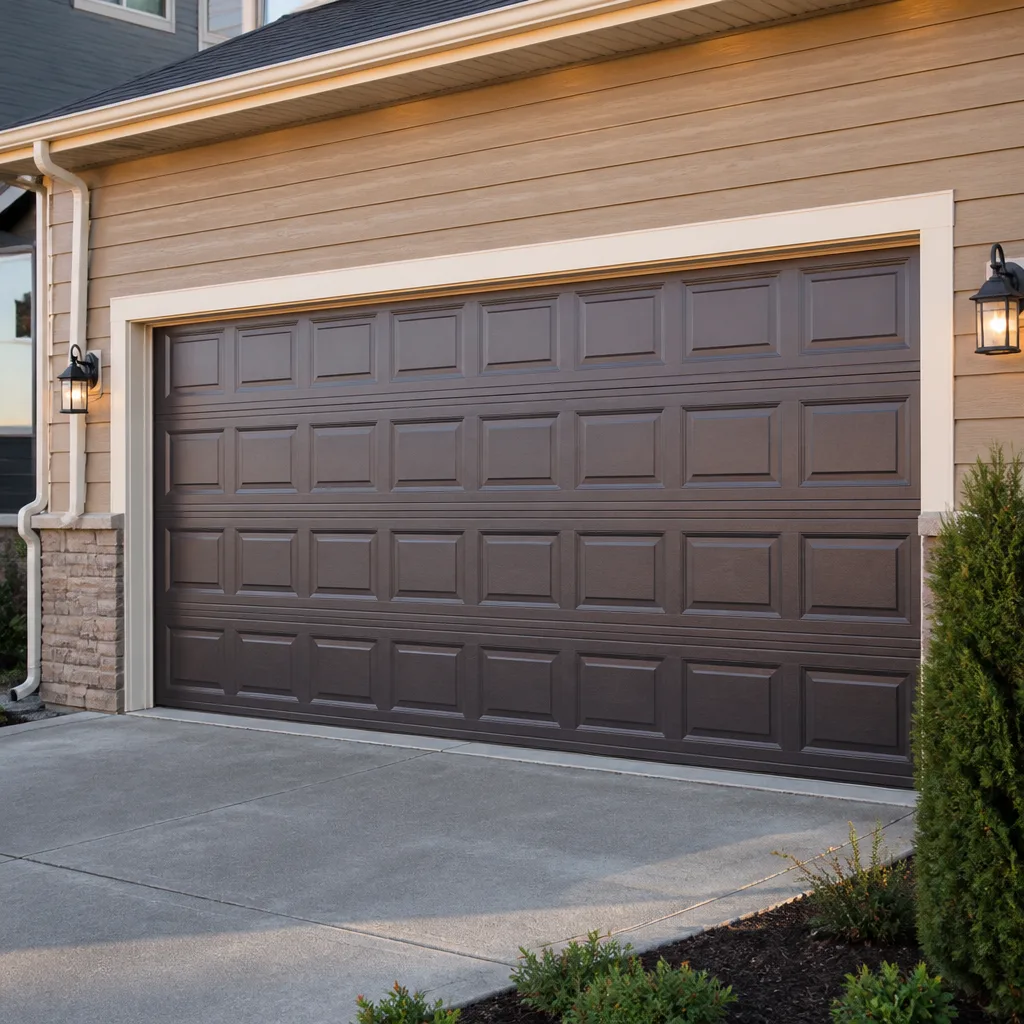 Raised-panel steel
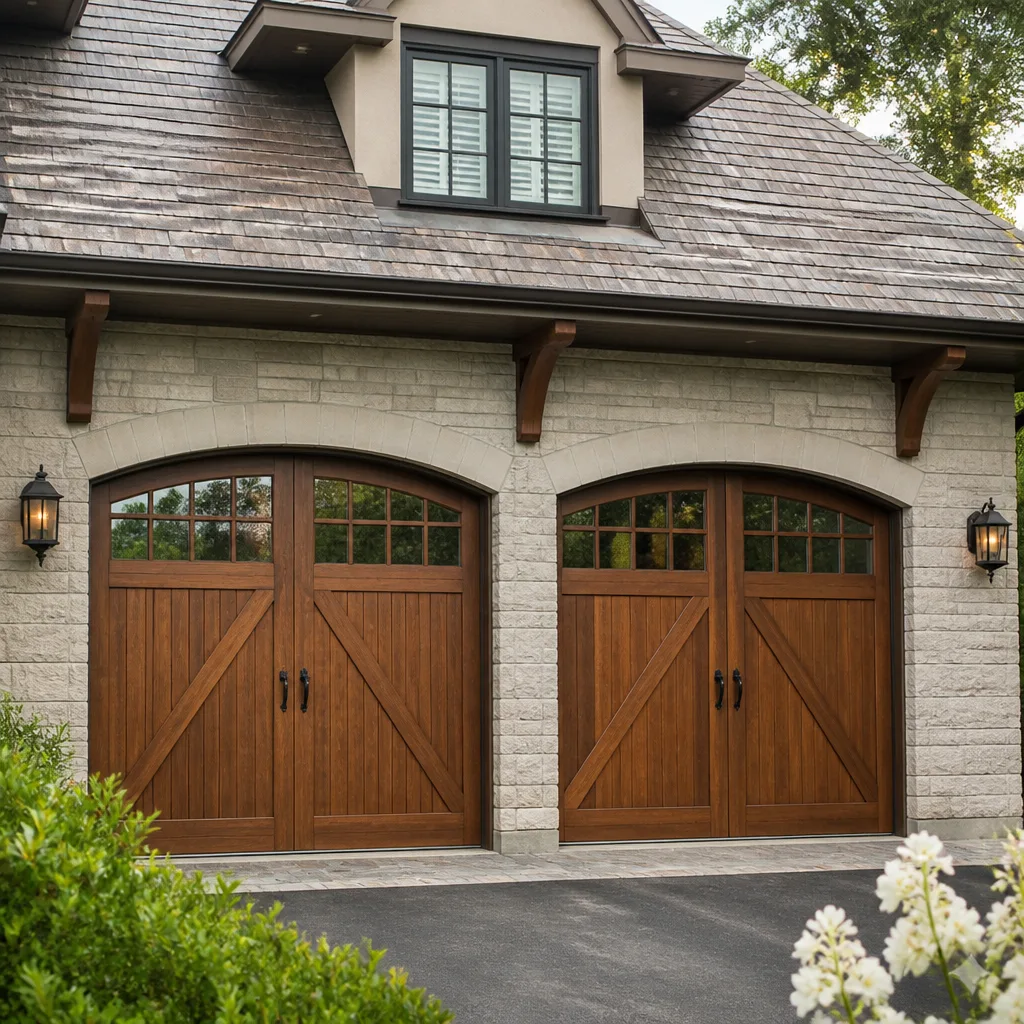 Carriage house
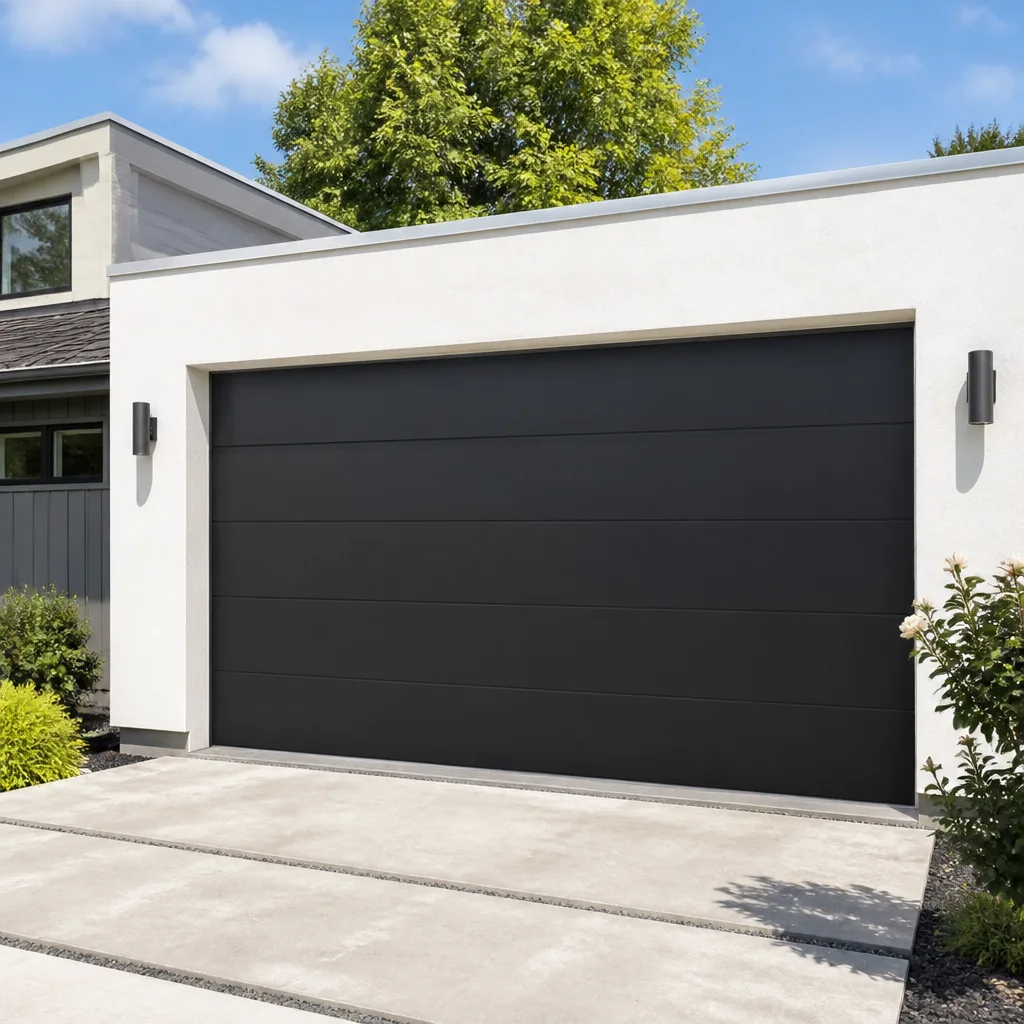 Modern flush
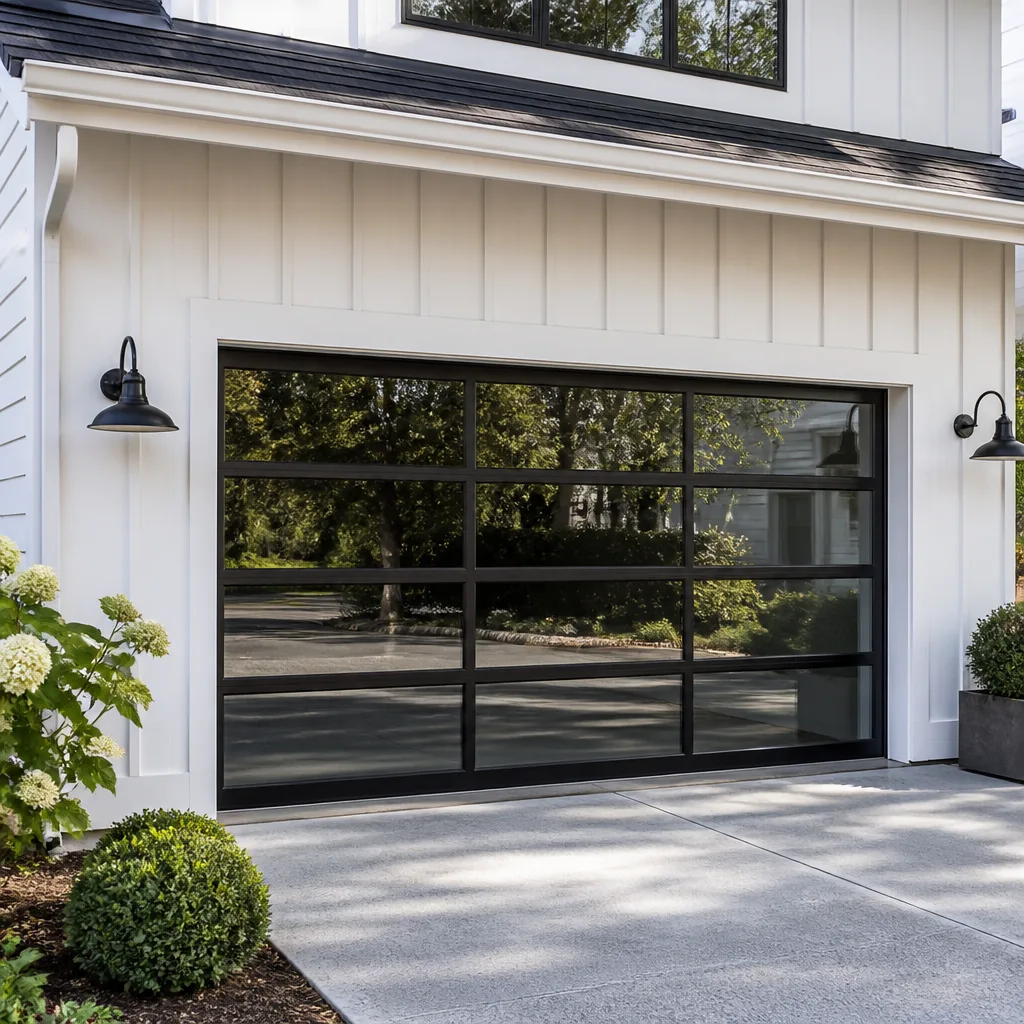 Full-view glass
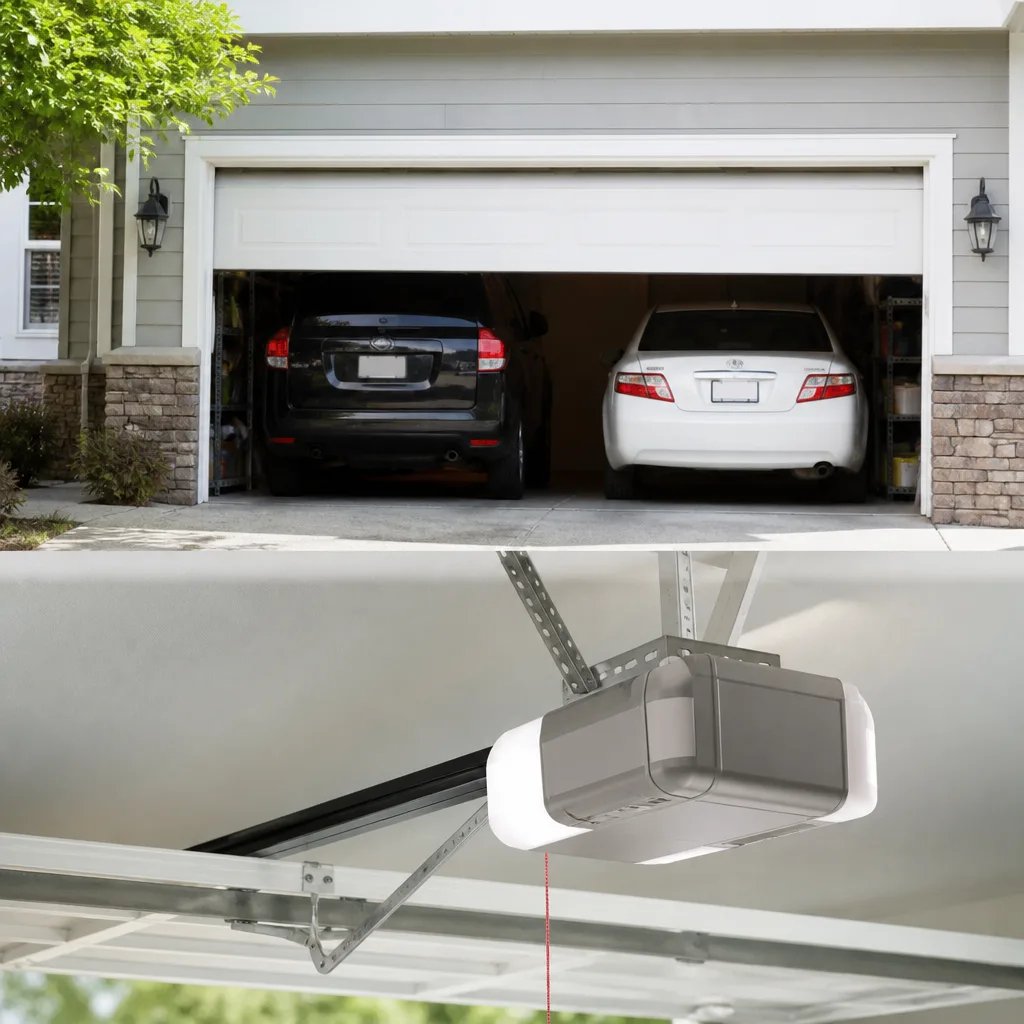 LiftMaster openers
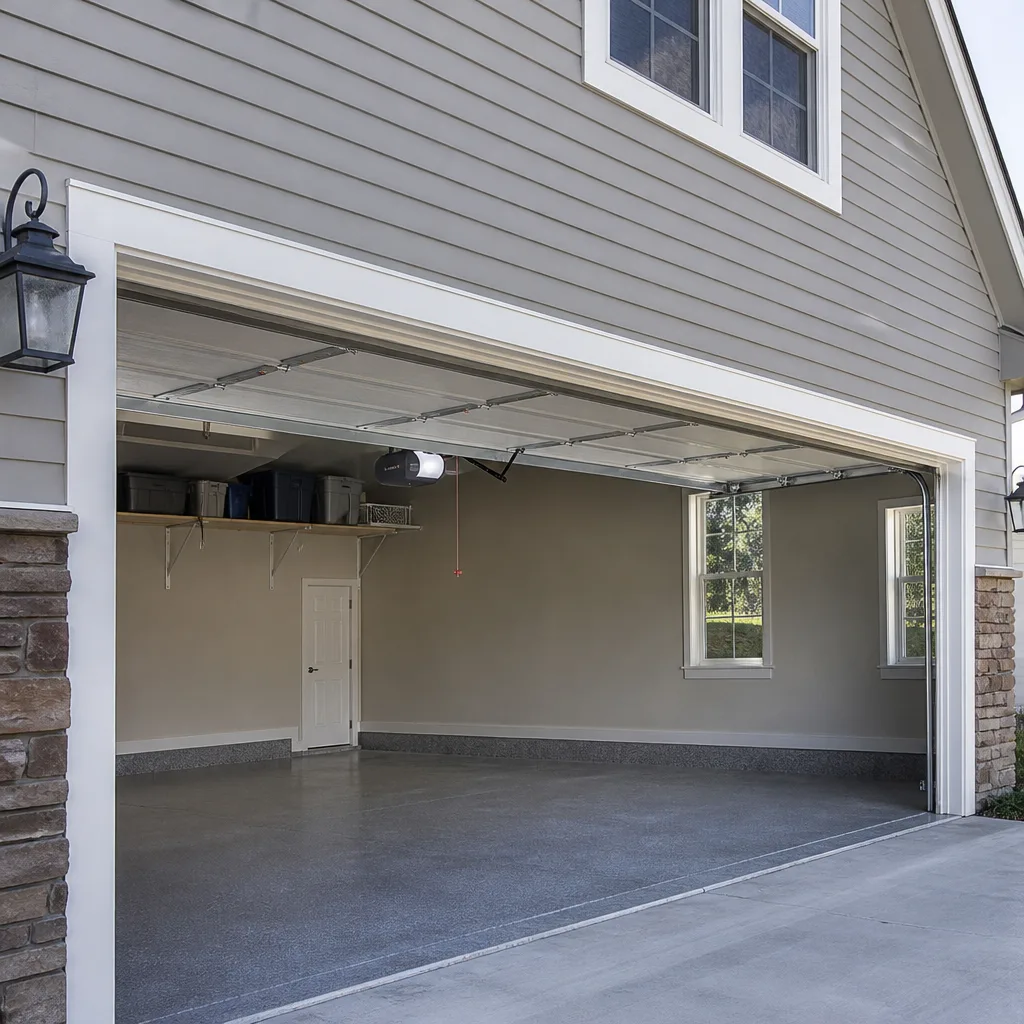 Chamberlain openers
Full 25-point door and opener safety check with every visit - springs, cables, rollers, tracks, and your LiftMaster or Chamberlain opener included
You get a price before we start. It does not change when the truck arrives.
Get your free estimateThe Complete Guide to Garage Doors in Chino Hills
Most garage door guides read like they were written for a flat suburban lot with mild weather and no one watching what you bolt to your house. Chino Hills is different. Triple-digit summer afternoons, cold winter mornings, hillside driveways cut into slopes, and HOA design boards that review everything visible from the street change the math on almost every recommendation you’ll find online. This guide covers what actually matters here: how the inland climate ages springs and panels, why some doors get rejected by Fairfield Ranch or The Preserve architectural committees, what sloped driveways do to seals and tracks, and how to decide whether the door you already own is worth repairing or should be replaced.
Quick Answer
Garage doors in Chino Hills need to handle inland thermal swings, HOA design rules, and hillside driveway angles. The right door for this area is typically a steel or composite panel with a reinforced bottom seal, a torsion spring system rated for temperature variation, and an opener sized for a door that may sit on a slope. Most Chino Hills homes built in the 1990s and 2000s still have their original builder-grade doors, which means replacement decisions usually hinge on spring wear, panel damage, and whether the door still meets current HOA standards.
Styles & brands we work with
- Raised-panel steel
- Carriage house
- Modern flush
- Full-view glass
- LiftMaster openers
- Chamberlain openers
Table of Contents
- How Chino Hills Weather Affects Garage Doors
- HOA Design Review in Chino Hills: What Gets Approved
- Sloped Driveways and Hillside Lots: What They Change
- Choosing a Door Material for Inland Heat
- Repair or Replace: How to Audit the Door You Have
- What Tract Builders Install vs. What Lasts 15+ Years
- Garage Door Opener Selection in Chino Hills
- A Chino Hills Homeowner’s Maintenance Checklist
How Chino Hills Weather Affects Garage Doors
Chino Hills sits inland in San Bernardino County, which means the climate is defined by wide daily temperature swings rather than humidity or coastal fog. It’s common to see a 35 to 40 degree spread between a cold morning and a 100°F afternoon. That thermal cycling works on every component of a garage door system, but it hits springs hardest.
Torsion springs are wound under high tension and rated for a specific number of cycles. Each time the door opens and the spring unwinds, then closes and winds back up, that’s one cycle. Temperature changes don’t add cycles, but they do change how the metal behaves. A spring that’s already past its rated lifespan is more likely to snap on a cold morning when the steel is contracted and brittle, not on a mild afternoon. This is why spring failures in Chino Hills often happen the first time a homeowner opens the door after a cool night.
Panels also respond to heat. Dark-colored steel doors absorb solar radiation throughout an afternoon and can get hot enough to make the metal expand measurably. Over years, that expansion and contraction is part of what causes hairline cracks in painted finishes and can loosen the adhesive on some panel insulation. Lighter colors and composite materials tend to hold up better here simply because they don’t get as hot in direct sun.
We see this pattern across Chino Hills neighborhoods, from Vila Borba to Butterfield Ranch: the doors that last longest are the ones sized for the temperature reality, not the ones that look best in a showroom. When we do garage door repair work, the diagnosis almost always traces back to heat cycling, spring age, or a combination of the two.
HOA Design Review in Chino Hills: What Gets Approved
Chino Hills has some of the most active HOA architectural review boards in San Bernardino County. Communities like Fairfield Ranch, The Preserve, and Vila Borba all have design guidelines that govern what a garage door can look like from the street. If you live in one of these neighborhoods, the door you want and the door you’re allowed to install may not be the same thing.
Most Chino Hills HOAs require garage doors to match or complement the home’s architectural style. That usually means:
- Approved color palettes, often limited to earth tones, whites, or specific trim colors
- No bare galvanized steel or unfinished metal visible from the street
- Panel styles that match the planned community’s look, such as raised panel, recessed panel, or carriage house
- No visible modifications, like exterior-mounted reinforcement bars, that alter the door’s appearance
- Written approval before installation, with the application including photos or manufacturer spec sheets
The rejection reasons we hear most often are color mismatch and panel style. A homeowner replaces a door with something they like, only to get a notice that the color is not on the approved list or the panel profile doesn’t match the neighborhood standard. That’s a five-thousand-dollar mistake that could have been avoided by submitting the spec sheet first.
For homes in The Preserve, the guidelines lean toward Tuscan and Spanish architectural styles, which usually means warm neutrals and panel profiles that read as solid wood from a distance. Fairfield Ranch has similar expectations, often with more flexibility on carriage house styles. The practical takeaway: get the HOA’s written approval before ordering a door, bring the manufacturer spec sheet to the review, and don’t assume a “standard white” door is automatically approved just because half the neighborhood has one.
We work with homeowners across Chino Hills who are navigating these reviews, and the process is always smoother when the door choice is documented and submitted before money changes hands.
Sloped Driveways and Hillside Lots: What They Change
A large share of Chino Hills homes sit on hillside lots with driveways that slope noticeably from the street to the garage. That slope changes the way a garage door system works in ways that flat-lot guides never mention.
The most important issue is the bottom seal. On a flat driveway, the door closes onto a level surface and the bottom weatherstrip compresses evenly. On a slope, the driveway often has a slight crown or angle right at the garage threshold. If the bottom seal isn’t flexible enough, or if the track isn’t adjusted correctly, you get a gap at one corner. That gap lets in dirt, leaves, and hot afternoon air, and it gives pests a way in.
Sloped approaches also change how the door sits in its tracks. The track system has to account for the fact that the door’s weight distribution is slightly different when the floor isn’t level. A door on a slope can drift to one side over time if the track brackets weren’t set up with that angle in mind. That drift shows up as scraping noises, uneven gaps at the sides, and premature wear on rollers and cables.
Here’s what we recommend for hillside lots in Chino Hills:
- Use a double-layer or triple-layer door with a reinforced bottom section that resists flexing on an uneven threshold
- Choose a heavy-duty bottom seal designed for irregular surfaces, not the cheapest single-flap weatherstrip
- Have the vertical tracks checked for plumb and adjusted to account for any driveway slope
- Ask for rollers with sealed bearings, which tolerate the side-load created by a slightly angled door better than plastic rollers
- Check the threshold itself: if the concrete has settled or cracked at the garage entry, the door will never seal correctly until that’s addressed
Sloped driveways are common in neighborhoods like Rolling Ridge and parts of Butterfield Ranch, and they’re one of the reasons a generic door install from a big-box store underperforms here. The door has to be set up for the site, not just bolted in.
Choosing a Door Material for Inland Heat
National buying guides push wood doors for curb appeal and steel doors for value, but Chino Hills heat changes the ranking. The best material here is whatever survives direct afternoon sun without warping, fading, or cooking the garage interior.
Steel doors are the most common choice in Chino Hills and for good reason. They’re durable, come in a wide range of styles and colors, and they handle temperature swings well. The key is getting a door with an adequate insulation core: a bare single-layer steel door turns a garage into an oven in July and August. A double-layer or triple-layer steel door with a polystyrene or polyurethane core keeps garage temperatures more stable and resists the denting that comes from heat-softened metal.
Composite doors are a strong alternative for homeowners who want a wood look without the maintenance. These are made from engineered wood fibers and resins, and they hold up better than natural wood in Chino Hills because they don’t expand and contract as dramatically with temperature changes. They cost more than steel, but they’re a good fit for homes in neighborhoods with strict HOA design guidelines that favor traditional aesthetics.
Natural wood doors are rare here for practical reasons. Real wood moves with every temperature swing, and in Chino Hills that means doors that swell, stick, and eventually crack. A wood door on a west-facing garage is asking for trouble: the direct afternoon heat pulls moisture out of the wood and the paint fails within a few years. If you love the look, a composite door from Clopay or a steel door with a wood-grain finish from Amarr will get you close without the maintenance burden.
What about color? For an uninsulated or attached garage that gets direct sun, lighter colors reflect more heat and keep the interior cooler. Dark colors look sharp and are common in The Preserve’s approval lists, but they absorb significantly more solar radiation. If you choose a dark door, make sure the insulation core is good enough to offset the heat gain.
Repair or Replace: How to Audit the Door You Have
Before you spend money on a new door, you need an honest read on the one you already have. Here’s a step-by-step audit that covers what actually matters on a Chino Hills home.
- Check the springs. Torsion springs have a painted line or band that indicates the rated cycle life. If the spring is rusted, stretched, or the line is gone, assume it’s near end of life. Springs are the single most common failure point in Chino Hills, and they should always be replaced as a matched pair.
- Look at the panel faces. Are there dents, rust spots, or areas where the paint has failed? A few cosmetic issues are repairable. If multiple panels are damaged, especially on a door that faces west, replacement starts making sense.
- Run the door manually. Disconnect the opener and lift the door by hand. It should move smoothly with even resistance. If it binds, dips, or requires real effort, you may have track, roller, or spring issues.
- Inspect the bottom seal. Kneel down and look at the gap between the door and the driveway. If you see daylight, the seal is failing and you’re losing conditioned air. This matters more on sloped Chino Hills driveways.
- Check the tracks and rollers. Look for wear grooves, bent sections, and rollers that wobble. Track problems on a hillside lot often indicate the door was never set up for the slope.
- Listen to the opener. A grinding or struggling opener may just need service, or it may be a sign the door itself has become too heavy or unbalanced.
If the door is 15 to 20 years old, has original springs, and shows panel damage in more than one section, replacement is usually the better financial move. You’re looking at repainting, spring replacement, and likely track work, and the total can approach half the cost of a new door that will last another 15 years. If the door is under 10 years old and the only issue is a broken spring or a worn seal, repair is the obvious call.
The deciding factor we tell homeowners in Chino Hills is simple: if the door’s bones are good, fix it. If the panels are failing and the springs are spent, replace it. We’ll tell you which one actually makes sense, because we carry enough brands to give you an honest answer instead of a pitch for the single line we happen to stock.
What Tract Builders Install vs. What Lasts 15+ Years
Most Chino Hills homes built during the 1990s and 2000s construction boom came with a builder-grade door, and there’s a big gap between what a tract builder installs and what actually survives 15-plus years in this climate.
Builder-grade doors are typically single-layer steel or thin double-layer doors with low cycle count springs, basic plastic rollers, and flimsy bottom seals. The door looks fine on day one, and it works. The problem is what happens over time: the springs are often rated for 7,000 to 10,000 cycles, which sounds like a lot until you realize that’s about 10 years of normal use. The rollers wear quickly. The bottom seal is the cheapest option available, and on a sloped driveway it starts letting in air and debris within a few years.
Doors that last in Chino Hills tend to have:
- Torsion springs rated for 20,000 to 30,000 cycles or more, which translates to 15 to 20 years of normal use
- Double-layer or triple-layer steel with a real insulation core, not just a thin adhesive-backed foam liner
- Rollers with sealed steel bearings that don’t wobble and don’t chew up the track
- A heavy-duty bottom seal and, on sloped lots, a reinforced bottom panel
- Tracks that were installed for the specific driveway angle, not just assembled to a template
The difference shows up in maintenance costs. A builder-grade door needs spring replacement and seal replacement within its first decade. A higher-spec door from Amarr or Clopay may cost more up front, but the total cost of ownership over 15 years is usually lower because the components last their full rated life.
When you’re weighing an opener brand like Genie against what the builder put in, the same logic applies. Builder-grade openers often have plastic gears and basic electronics. A replacement from a brand we know well, whether it’s Chamberlain or Genie, brings a DC motor and a more durable gear train, and that alone reduces the likelihood of a failed opener in year five or six.
Garage Door Opener Selection in Chino Hills
Your opener is the motorized half of the system, and it needs to be chosen for the same realities as the door itself. In Chino Hills, that means an opener that can handle a heavy insulated door, a sloped driveway’s effect on door travel, and the temperature swings that stress electronics and drive mechanisms.
The most important spec is power. A heavy double-layer or triple-layer steel door needs an opener with enough horsepower to lift it without straining. A builder-grade opener sized for a light single-layer door will struggle with a heavier replacement door, and that strain shows up as stripped gears and burned-out motors. We always pair the opener to the door’s actual weight and balance.
Drive type matters for noise. Belt-drive openers are the quietest and the best choice for attached garages where the master bedroom or a living room is directly above the garage. Chino Hills homes often have bedrooms over the garage, and a loud chain-drive opener at 6 a.m. is a daily annoyance. Chain drives are cheaper and work fine for detached garages where noise doesn’t matter. Screw drives split the difference but are less common here.
For the electronic side, look for an opener with a DC motor, which runs quieter and handles the heat of an enclosed Chino Hills garage in August better than a hot-running AC motor. Battery backup is worth considering if you park cars in the garage and want to be able to open the door during a power outage. It’s not essential, but it’s a real convenience on hillside streets where a car parked in the driveway can be tricky when the power is out.
We work on openers as a specialty, not an afterthought. That means garage door opener repair calls to us usually end with the homeowner’s existing opener working again, not with a pitch to replace it. But when replacement is the right call, we can put in a Chamberlain or Genie unit that matches the door and the house, and we’ll set the travel limits and force settings for your specific driveway.
A Chino Hills Homeowner’s Maintenance Checklist
Maintenance here is about catching heat damage and slope wear before they turn into a broken spring or a door off its tracks. Most of this takes under ten minutes a season.
- Every two months: open and close the door and listen for changes in sound. A new scrape, pop, or grind is an early warning.
- Twice a year: clean the tracks and check for debris. Chino Hills gets dust and fine dirt that works its way into roller bearings and track joints.
- Every spring: inspect the bottom seal. Run your hand along it and look for cracks, flattening, or gaps where it meets the driveway. Slopes wear seals faster.
- Every summer: check the springs for rust or gaps. Heat accelerates rust on unprotected steel, and a rusty spring is closer to failure.
- Every fall: test the opener’s safety reverse by placing a piece of wood on the ground and closing the door on it. The door should reverse immediately when it contacts the object.
- Annually: lubricate rollers, hinges, and springs with a garage door specific lubricant. WD-40 is not the right product.
If any step in this list reveals something you’re not sure about, stop and call someone who works on doors every day. Some of these components are under enough tension to cause serious injury if handled incorrectly by a homeowner.
Common Mistakes to Avoid
- Replacing one spring instead of both. When one spring breaks, the other has the same age and cycle count. Replacing only the broken one means paying twice for labor later and living with an unbalanced door in the meantime.
- Skipping HOA approval before ordering a door. Fairfield Ranch and The Preserve review boards reject doors over color and panel style regularly, and a rejected door is already mounted and paid for by then. Get written approval first.
- Buying a door based on price alone. The cheapest steel door from a big-box store has a low cycle spring and a basic seal that will need replacement within a few years on a Chino Hills hillside lot.
- Ignoring a noisy door. A scrape or bang is not normal. It’s a component telling you it’s about to fail, and the repair is cheaper before it actually breaks.
- DIY spring replacement. Torsion springs are wound under enough tension to cause serious injury or death. This is not a weekend project, and no YouTube video changes that.
- Assuming a heavier door will work with the old opener. If you upgrade from a thin builder door to an insulated double-layer or triple-layer door, the old opener may be undersized. Size the opener to the new door.
- Lubricating with the wrong product. Grease and WD-40 attract dirt and gum up rollers and hinges. Use a lubricant designed for garage door components.
See the difference
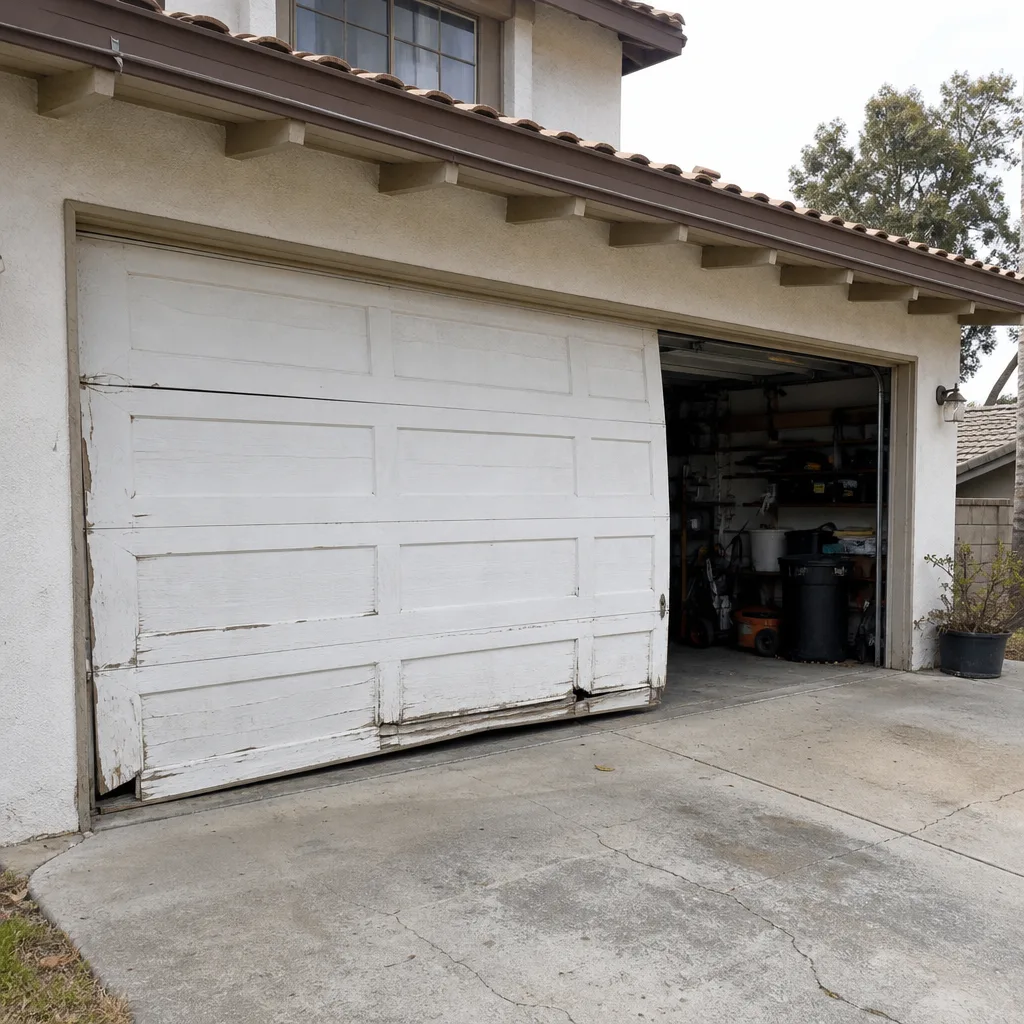 Before
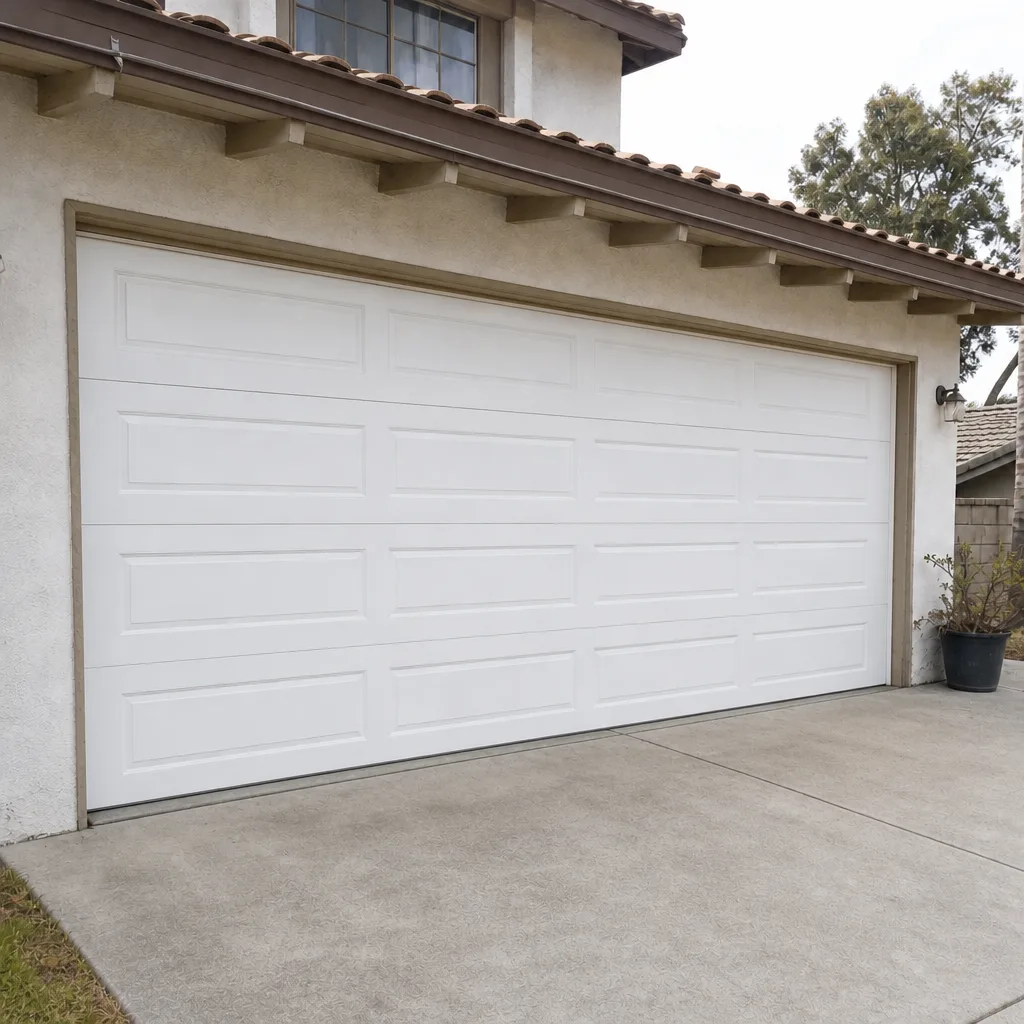 After
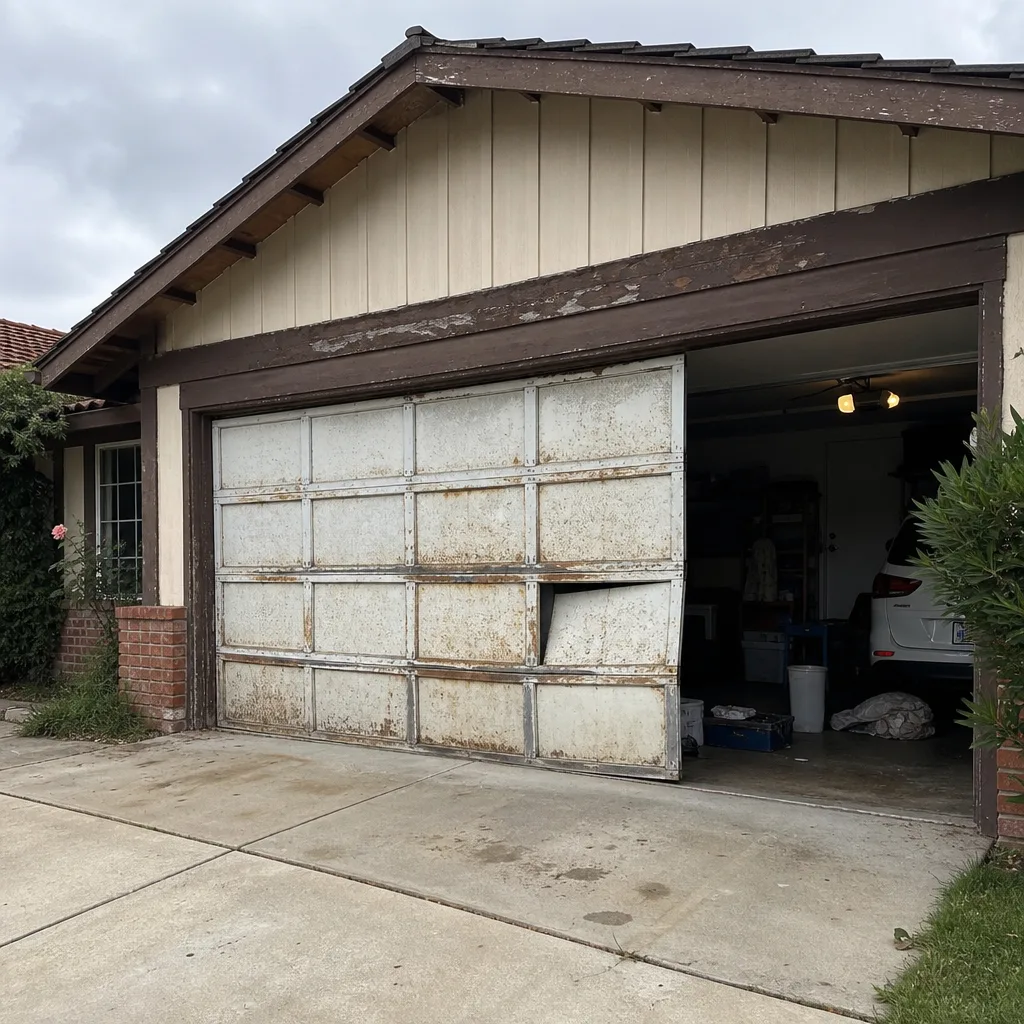 Before
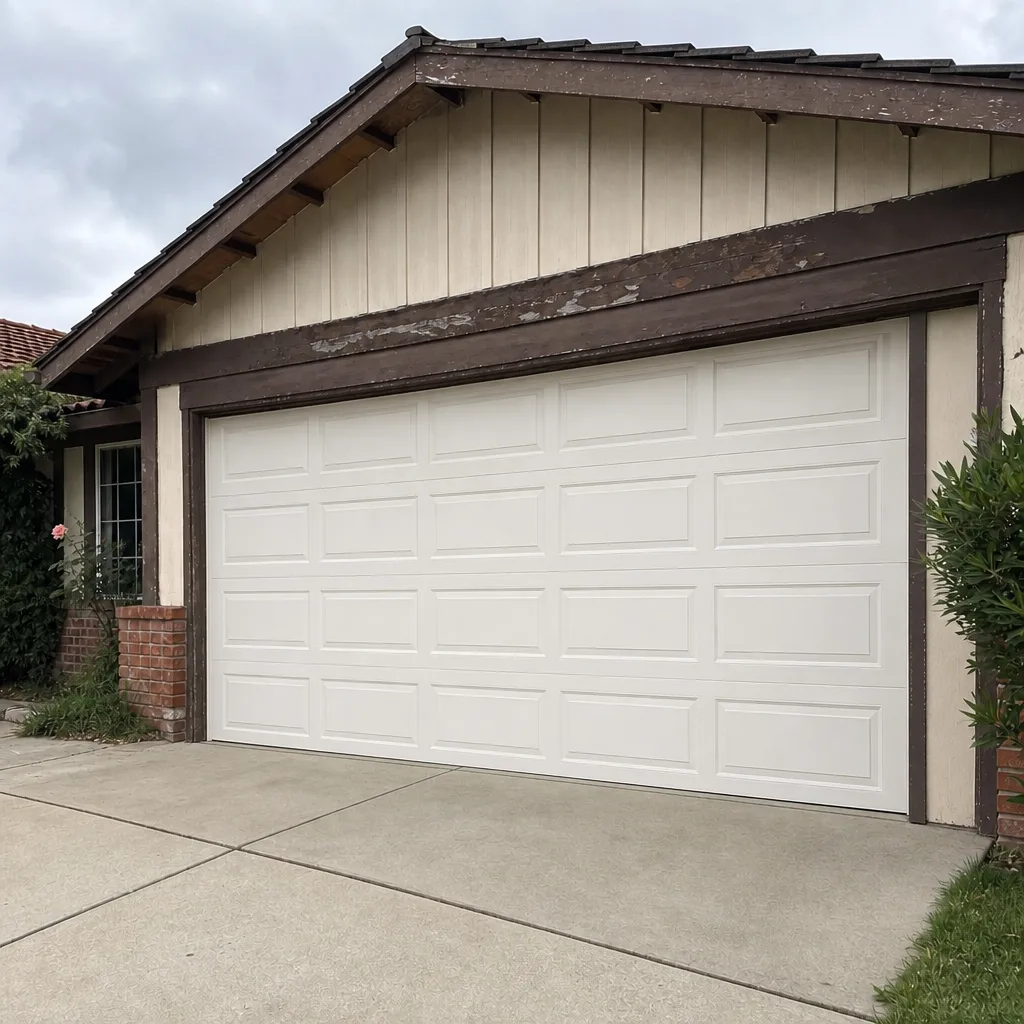 After
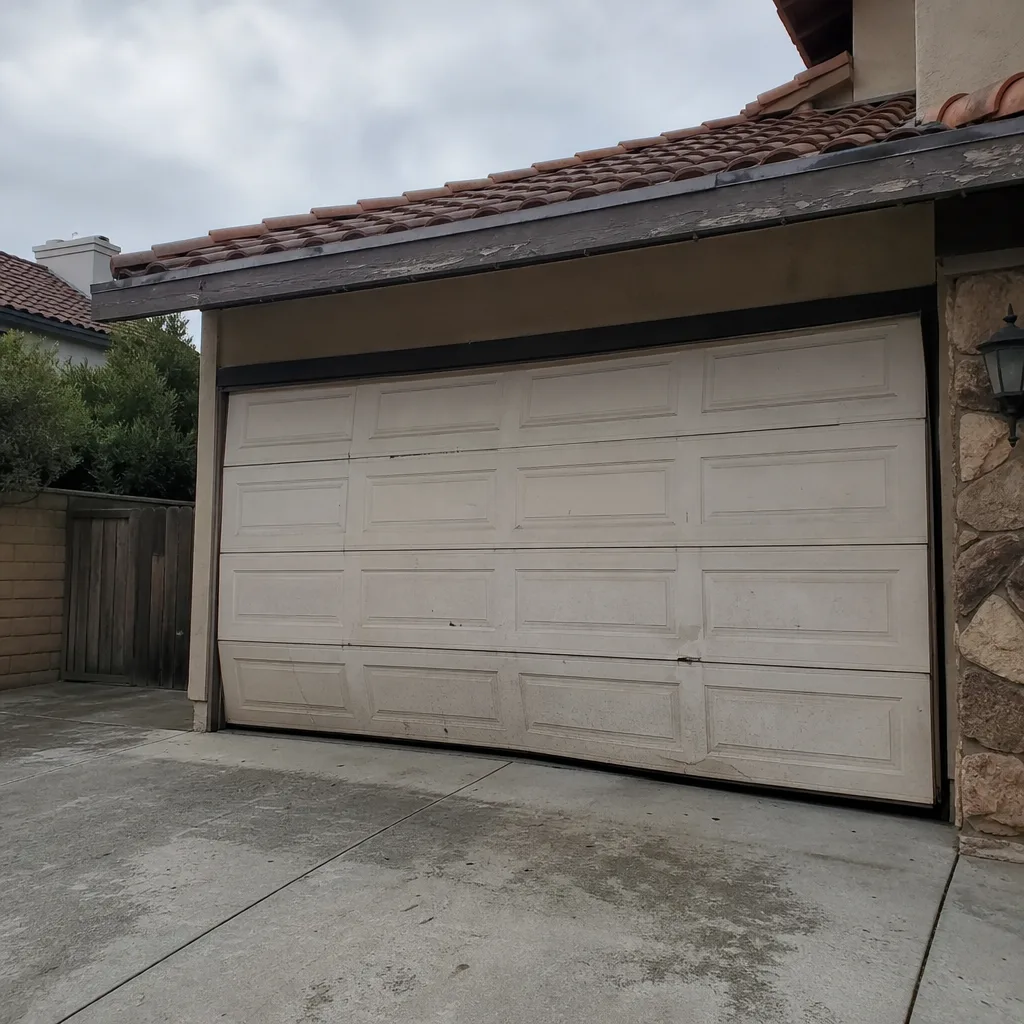 Before
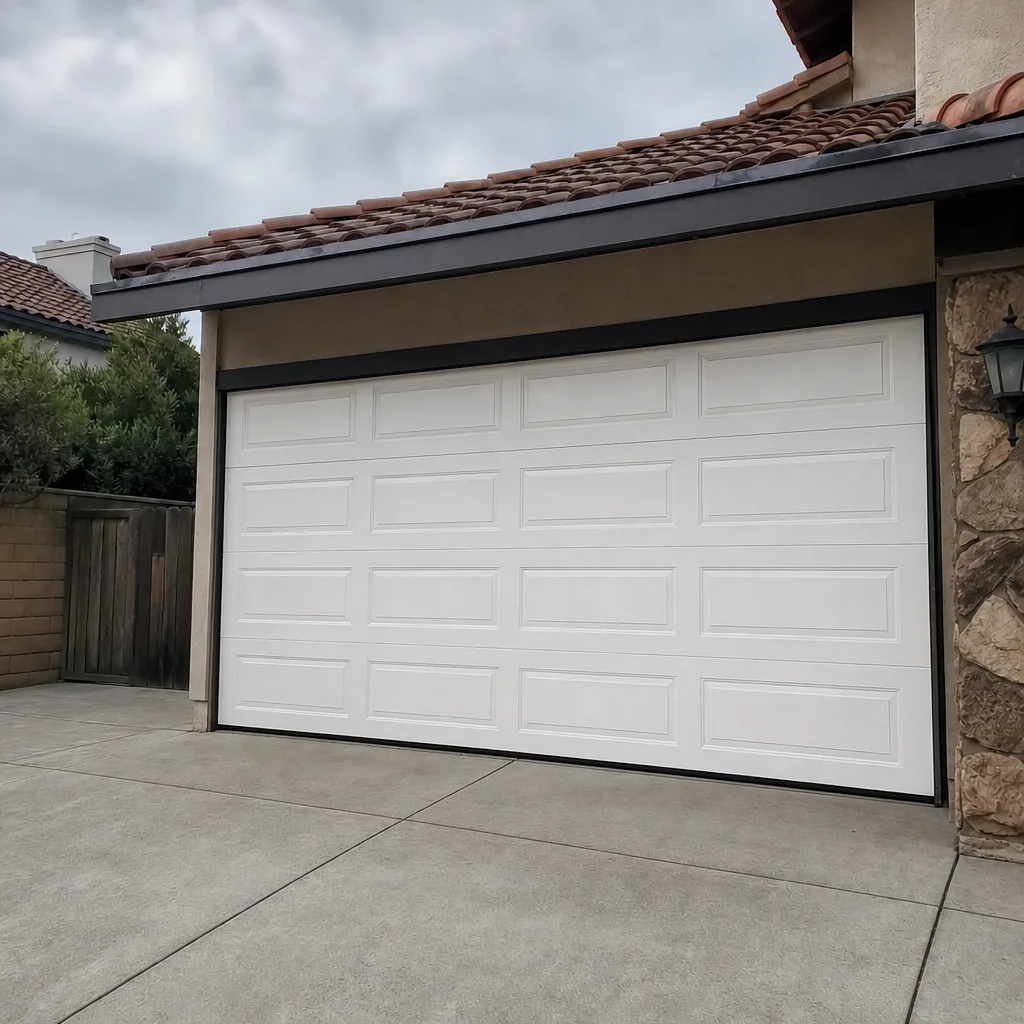 After
When to Call a Professional
A broken spring, a door off its tracks, or a snapped cable are all conditions to stop using the door immediately and call someone who works on these systems every day. The spring and cable system is under high tension, and the door itself weighs hundreds of pounds. If the door won’t balance when you lift it manually, if you see a visible gap in a spring, or if the opener is straining and the door is jerking, that’s a specific repair situation. A door that won’t open with a car trapped inside is an urgent call, and that’s exactly when it helps to have a team in Chino Hills that picks up the phone when you call. Pinecrest Garage Door offers free estimates in Chino Hills – call (877) 376-0803.
Frequently Asked Questions
A new garage door in Chino Hills typically costs between $1,200 and $4,500 depending on size, material, insulation, and brand. Steel doors start lower, composite and carriage house styles run higher, and HOA-approved colors don’t change the price but do change what you’re allowed to order. Call (877) 376-0803 for a written estimate – estimates are free and the final price is set before any work starts.
Typical builder-grade springs last about 7,000 to 10,000 cycles, which is roughly 8 to 12 years of normal use in Chino Hills. Higher cycle springs rated for 20,000 cycles or more can last 15 to 20 years. Temperature swings don’t reduce cycle life directly, but they do make older springs more likely to snap on cold mornings. Call (877) 376-0803 if you think your springs are near the end – we’ll inspect them and give you a straight answer.
Yes, in most Chino Hills communities including Fairfield Ranch and The Preserve, garage door changes require written HOA approval before installation. The review typically covers color, panel style, and how the door looks from the street. Bring the manufacturer’s spec sheet to the review and get approval in writing before you order anything.
In most cases, yes. We answer 24/7 and provide fast dispatch from 7am to 7pm, Sunday through Friday. We stock springs, cables, rollers, and seals for the brands we service, so the common failures are usually fixed on the first visit. Call (877) 376-0803 and we’ll get someone to your Chino Hills home as soon as the schedule allows.
No. We quote a price based on what we can see and what we diagnose, and we agree on it with you before any work starts. The written estimate is the price. The only exception would be if we find a separate problem you didn’t know about, and in that case we stop and get your approval before doing anything.
We fix doors whenever it makes sense. We work on every major brand, including Chamberlain, Genie, Clopay, and Amarr, so we diagnose what you have before we talk about replacement. If your door’s springs and tracks are in good shape, we repair the problem and leave the rest alone. If the door is failing in multiple areas, we’ll explain why replacement is the better long-term value and let you decide.
The Bottom Line
Chino Hills garage doors live a harder life than doors in flatter, milder climates. The heat cycles, the hillside driveways, and the HOA design boards all shape what works here, and a door that’s right for a coastal condo is often wrong for a Butterfield Ranch hillside. The smart approach is to audit what you have, understand what’s actually failing, and choose a replacement or a repair based on the honest math. A good steel or composite door with high cycle springs, a quality bottom seal, and an opener matched to the door will give you 15 years or more of quiet, reliable service. When something does go wrong, call (877) 376-0803. We answer 24/7. Fast dispatch from 7am to 7pm, Sunday through Friday.
Written by the team at Pinecrest Garage Door, serving Chino Hills since 2018.